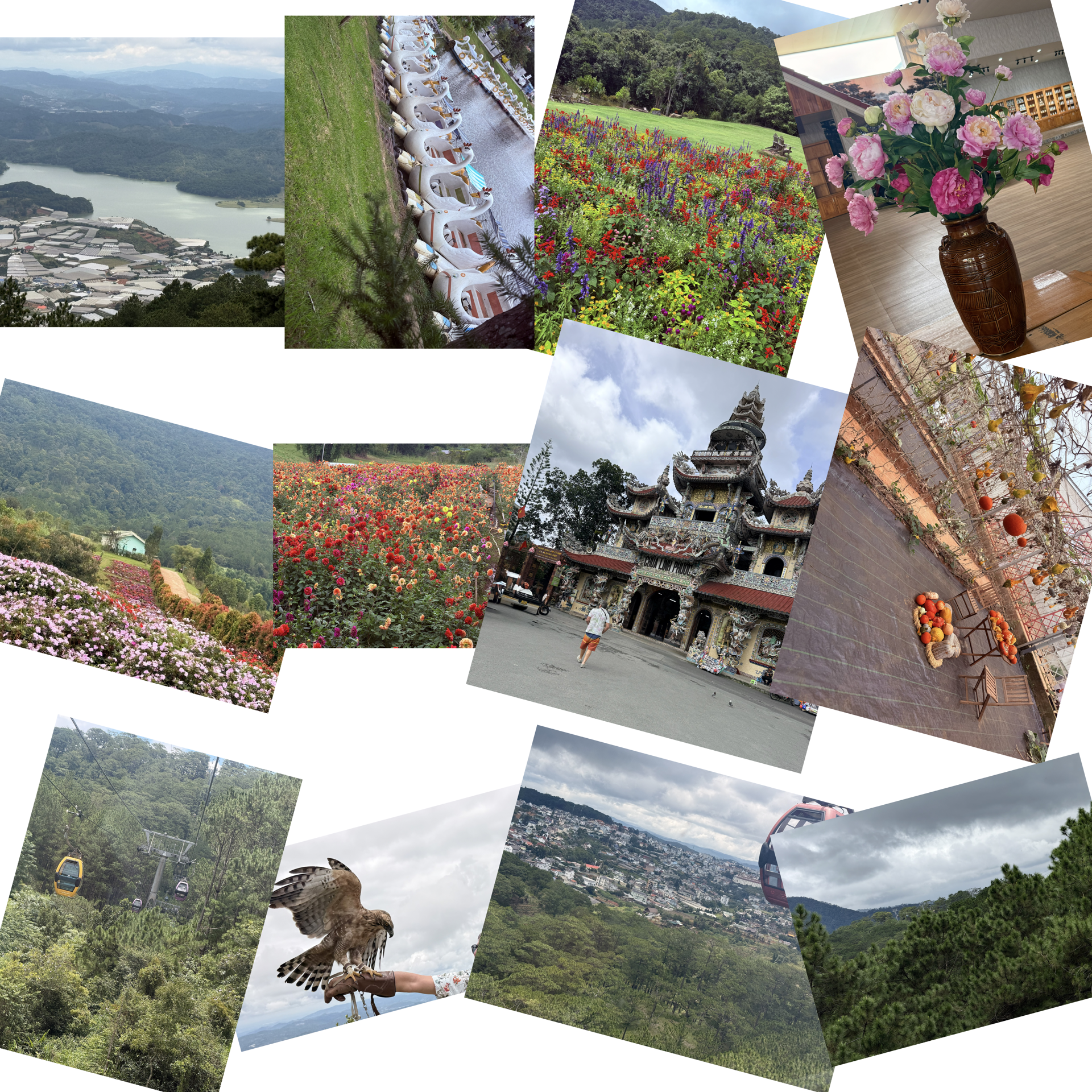
Dalat, a delightful city in Vietnam’s Central Highlands, offers so much – amongst which are plenty of tourist attractions.
Below, enjoy the stories and pics describing the six places we visited and enjoyed for the special, memorable experiences they offered.
1.
The lake is named after a Vietnamese female poet. It is a traditional name that evokes poetic imagery of spring’s scents and beauty.
In the heart of Dalat city, surrounded by French-era villas, lush gardens, and mature trees, this crescent-shaped lake is a popular destination, especially in the cooler seasons. But in summer, when we visited, it was a lovely spot for quiet, meditative time and shoreline strolls.
During the more tourist-friendly months, you can hire bikes or take one of the Swan paddle boats out onto the lake. Sadly, the paddle boat attraction was closed that day. But they looked so elegant and photogenic lined up in rows along the lakeshore; just seeing them like that was an attraction in its own right.
After wandering around parts of the lake and taking in the interesting and attractive surroundings, we enjoyed a welcome beer and delicious spring rolls at the lakeside restaurant TaThuy – an especially appealing stop because of its generous outdoor-seating area.
As you will see in the photos below, the sky was overcast, but because it was summer, it was warm, and the clouds provided a gratifying respite from the searing sun.
Note the affluent villas perched behind established trees and gardens.
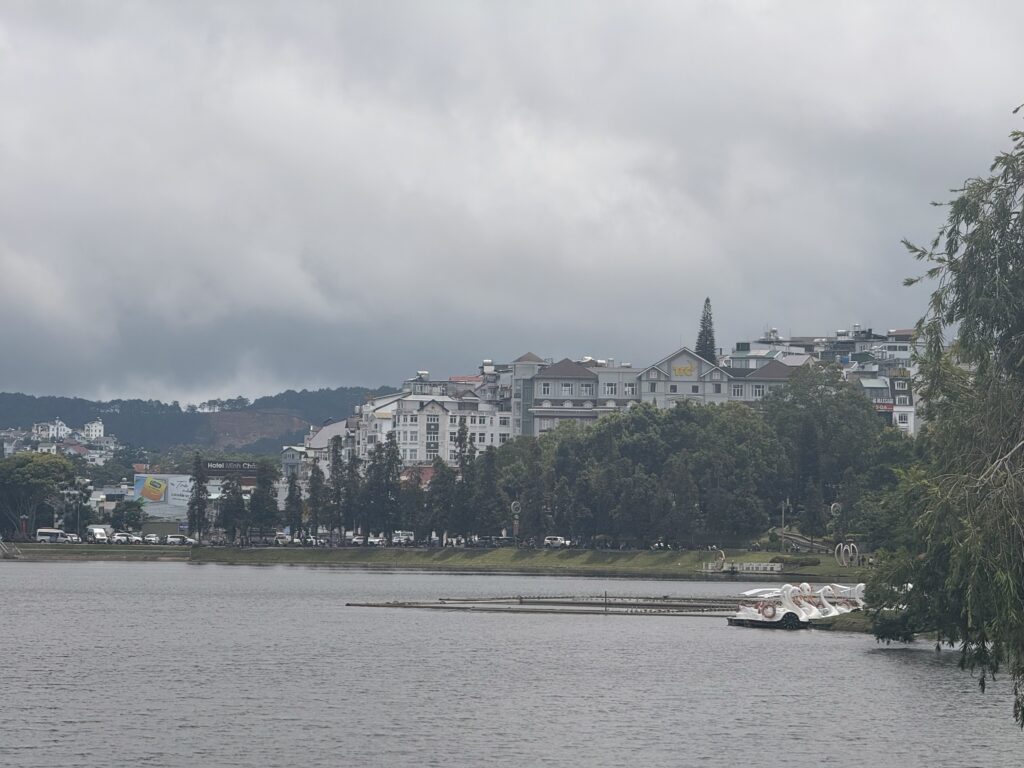
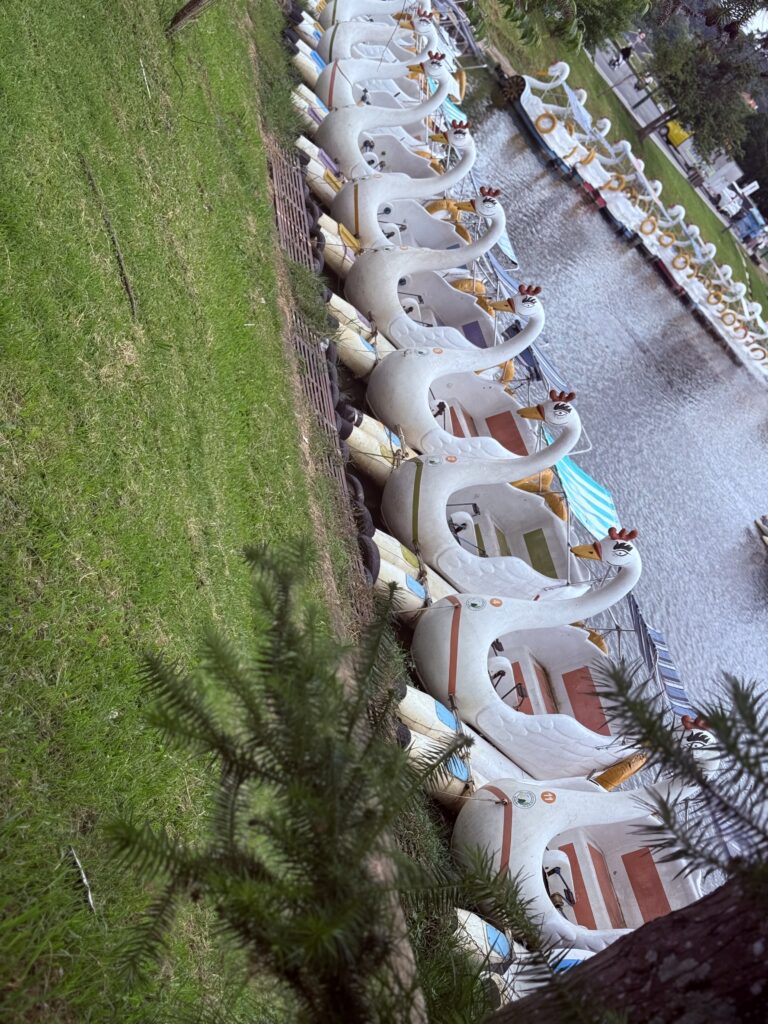
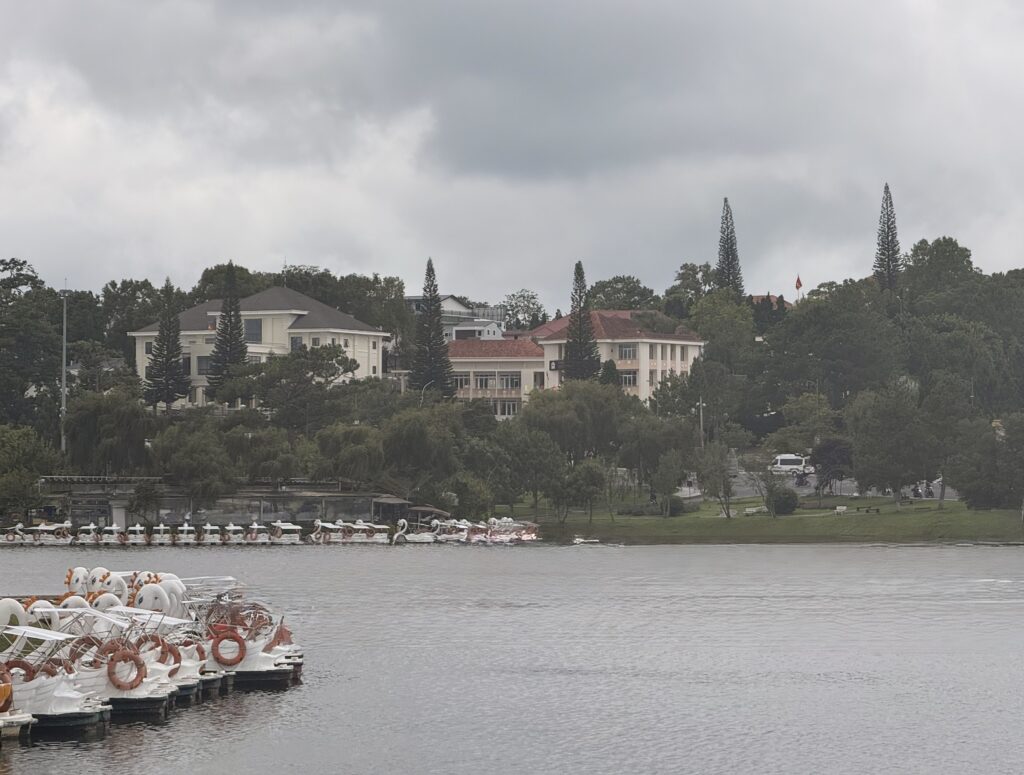
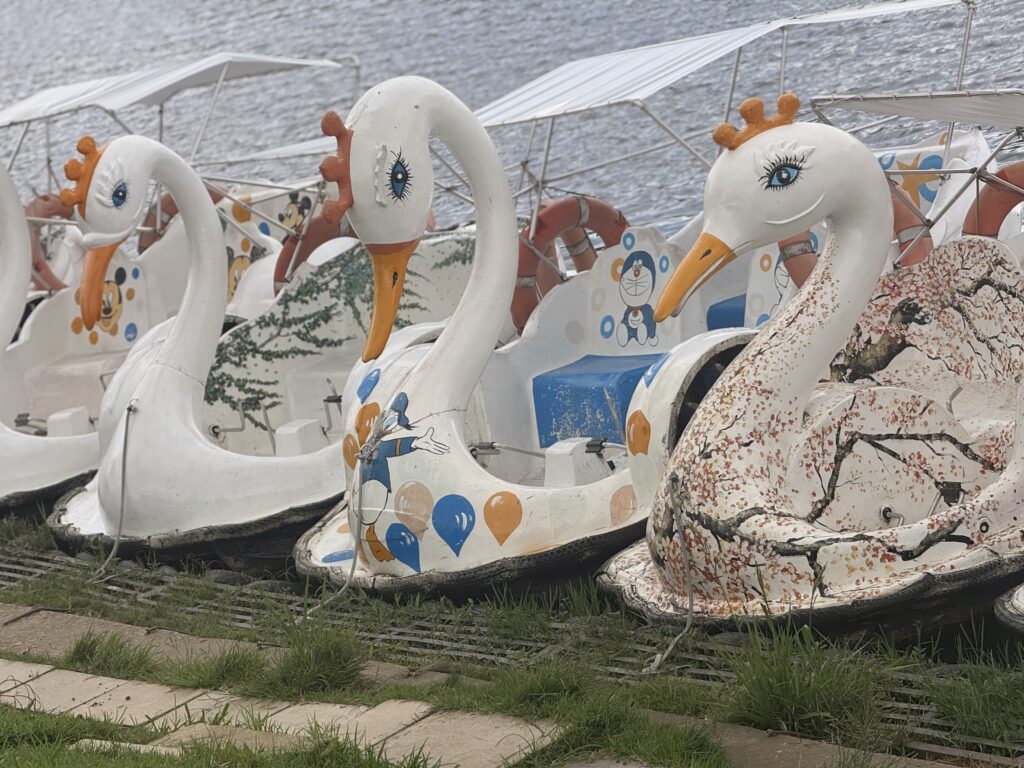
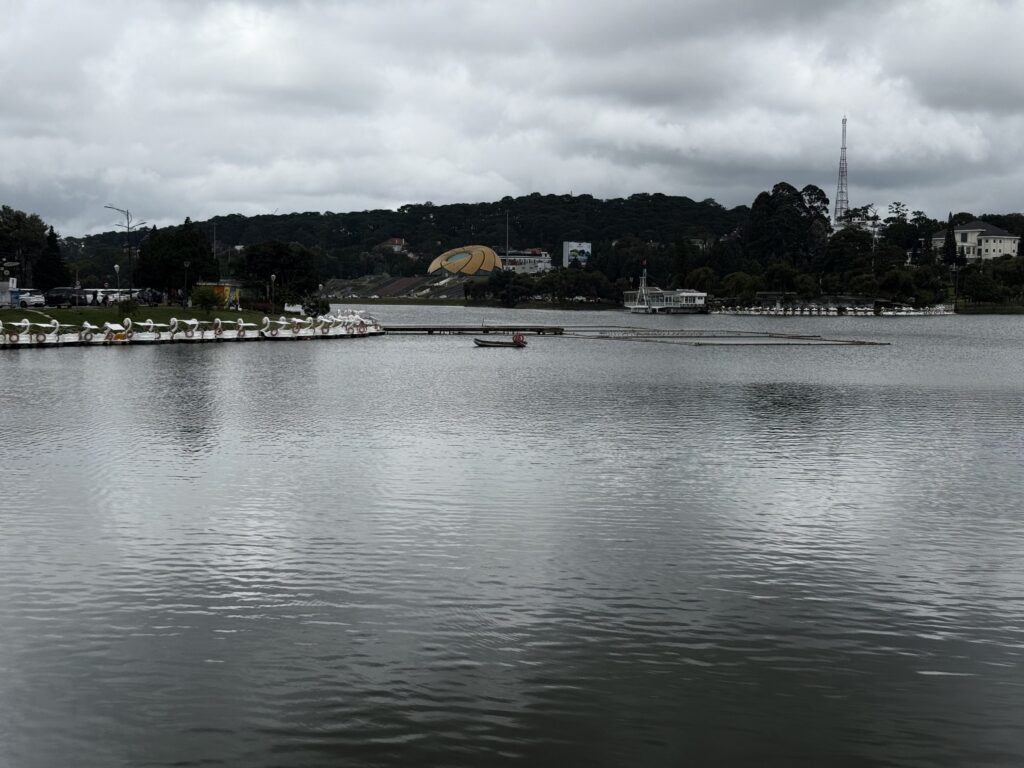
Finally, looking into the distance in the lower-right photo, you’ll see a large yellow-and-green glass dome. This is the “Yellow Sunflower Dome” (The sunflower being a much-loved floral symbol of Dalat). The dome contains a modern theatre and arts centre, seating around 1500 people. It also contains one of the largest underground shopping malls.
2.
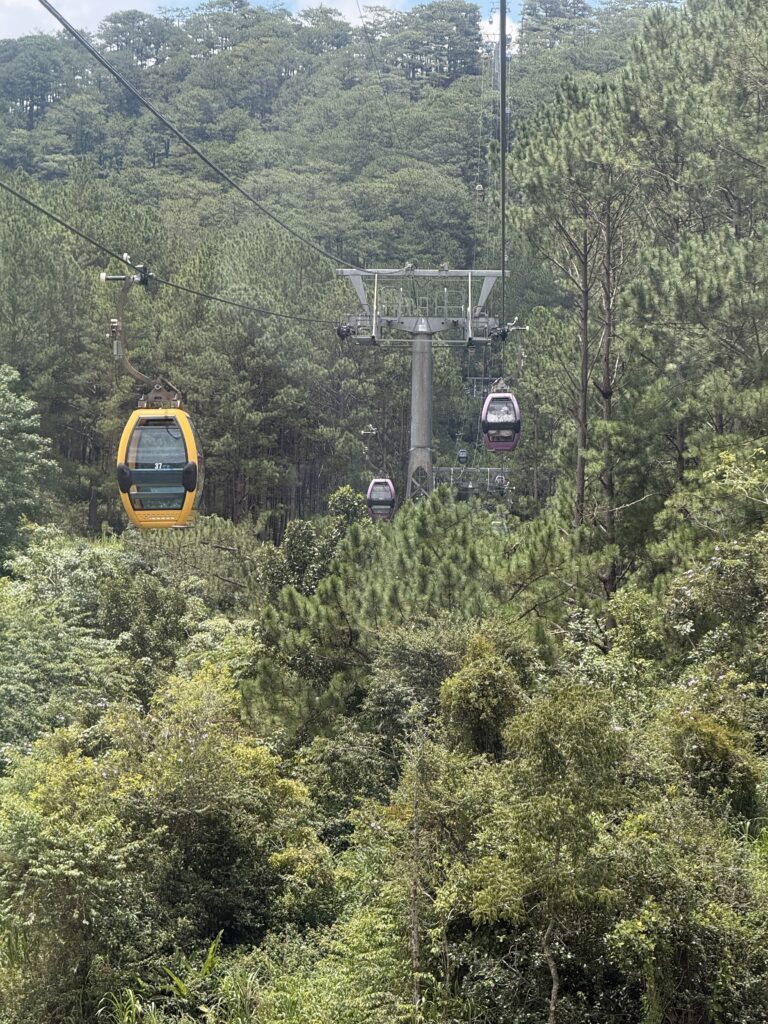
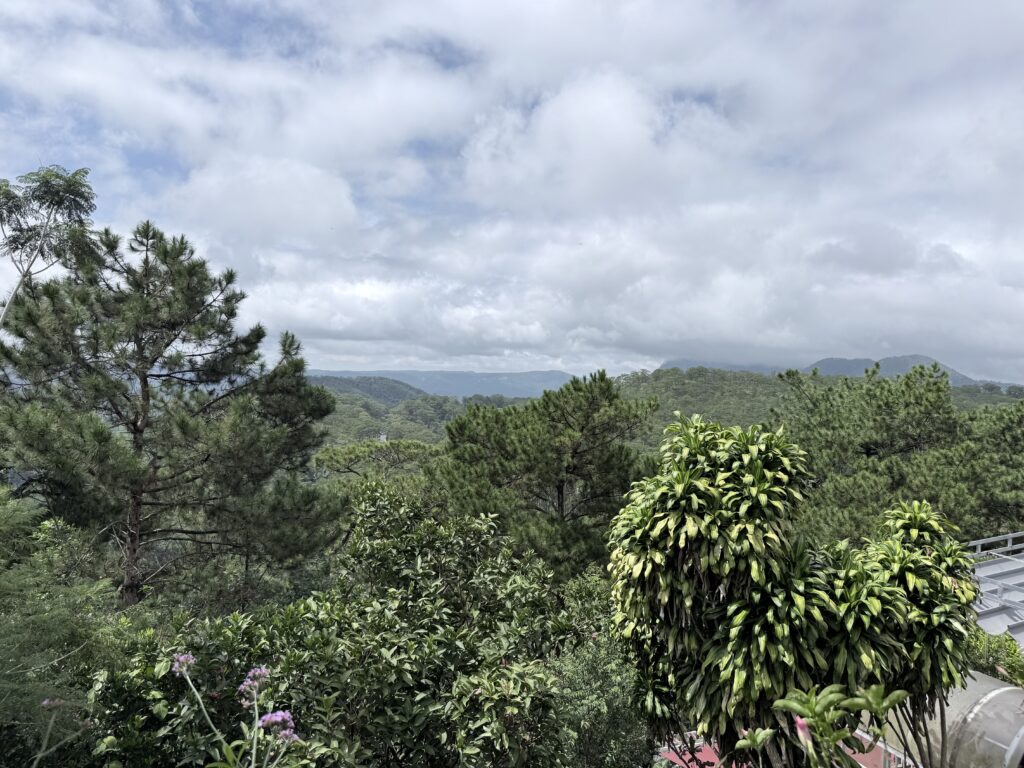
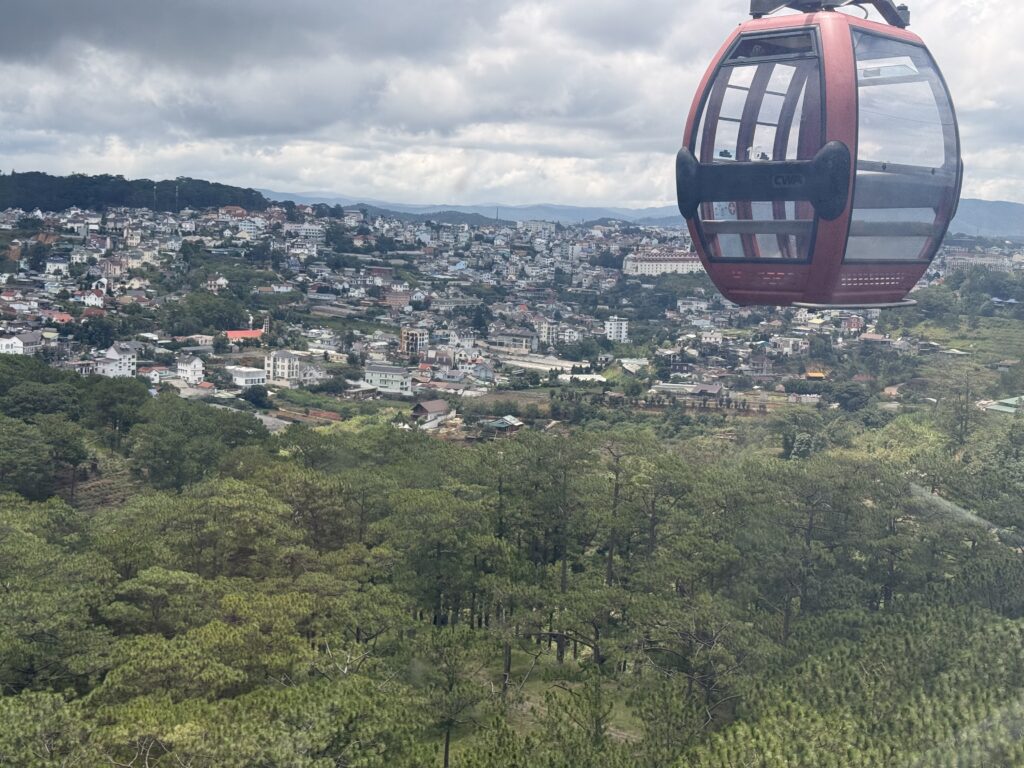
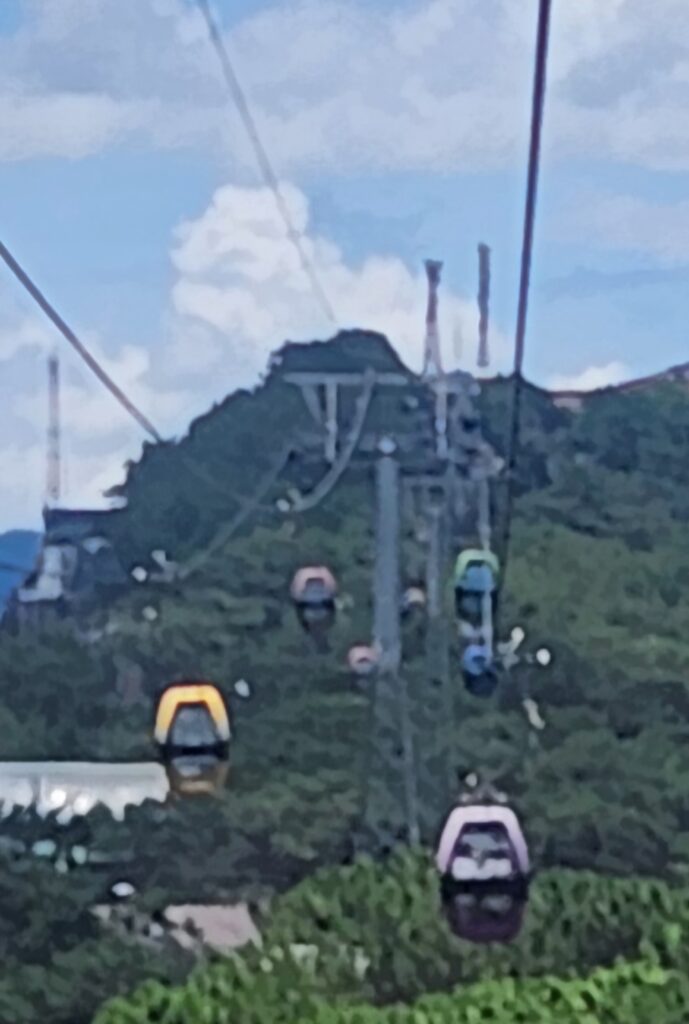
Gliding on 2,700 metres of cable in a smart, coloured car, passengers can view below them agricultural greenhouses dotted across the lush landscape, huge pine canopies, pretty homes tucked into hillsides, animals mooching, minding their own business, and distant, misty views of impressive, forest-covered mountains.
And, as if Mother Nature, during the 15-minute ride, is treating everyone to a few minutes of respite from busy lives, there is complete silence. The hush is soothing and somehow humbling. We were, after all, 30 metres up and travelling to an altitude of approximately 1,500 metres. So it was a long way down to what would be a rugged landing.
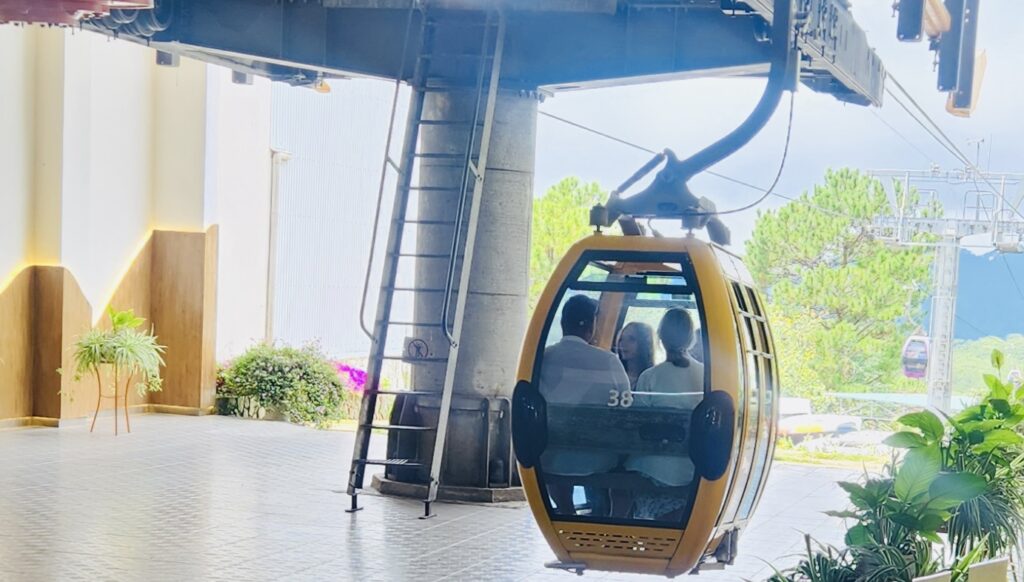
There were queues on the day we decided to take the ride. But in typical Vietnamese style, the crowds were managed well with polite sternness and unequivocal instructions. So waiting tourists courteously took their turns and were then guided to their car as it came around the cable rotation to the passenger platform. All aboard; we departed smoothly and noiselessly across the wild green trees of the Central Highlands.
Priced at a very cheap NZ $12 return each, it was definitely worth the effort.
3.
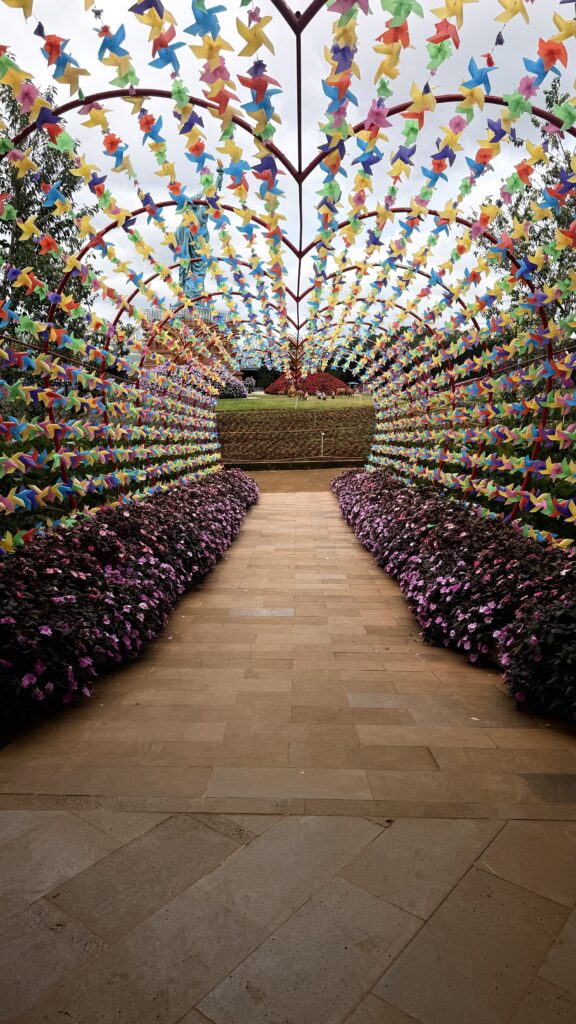
Spanning about 240 hectares and just 3 kilometres from the Dalats city centre, Van Thanh Flower Village is absolutely worth a visit.
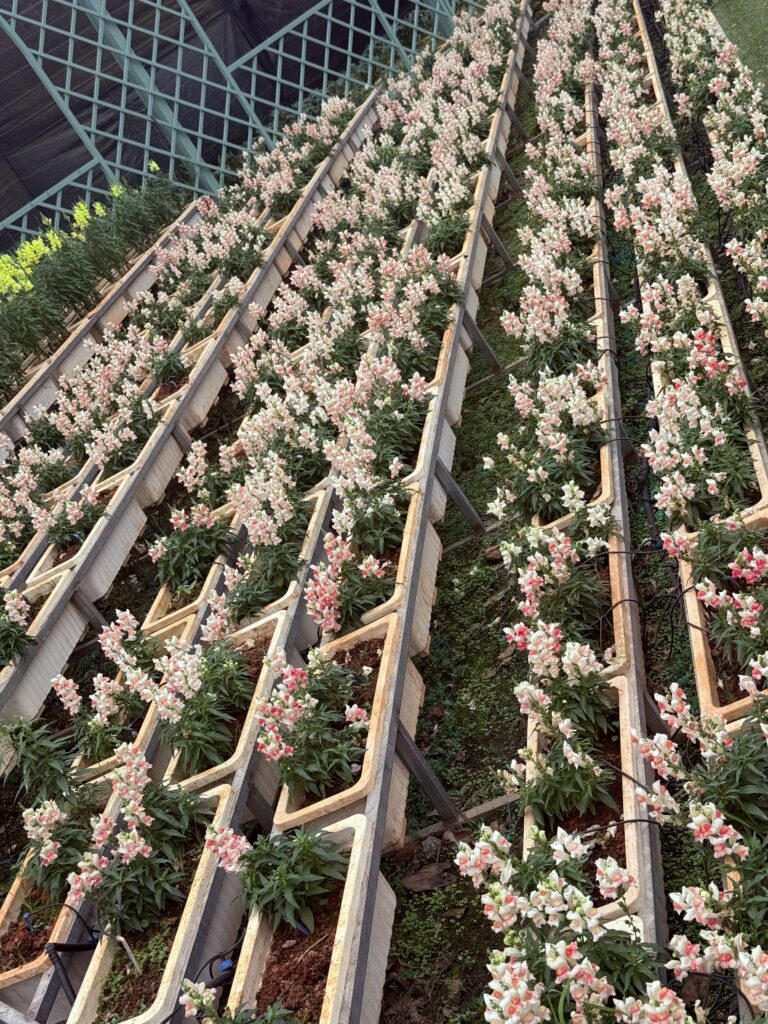
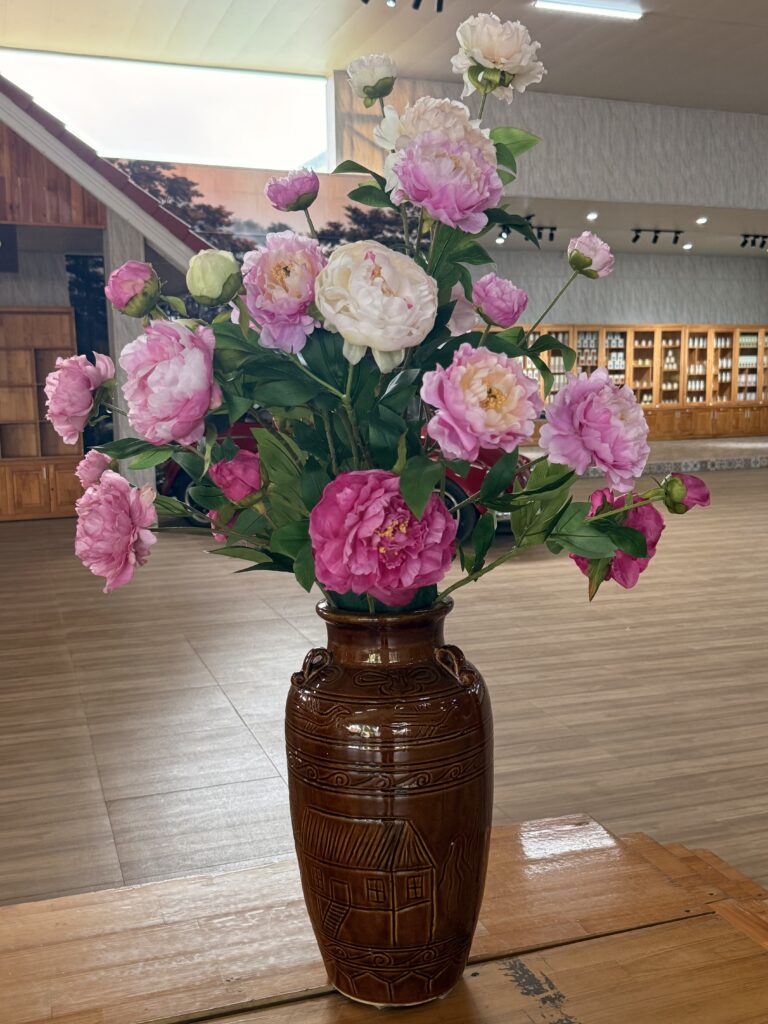
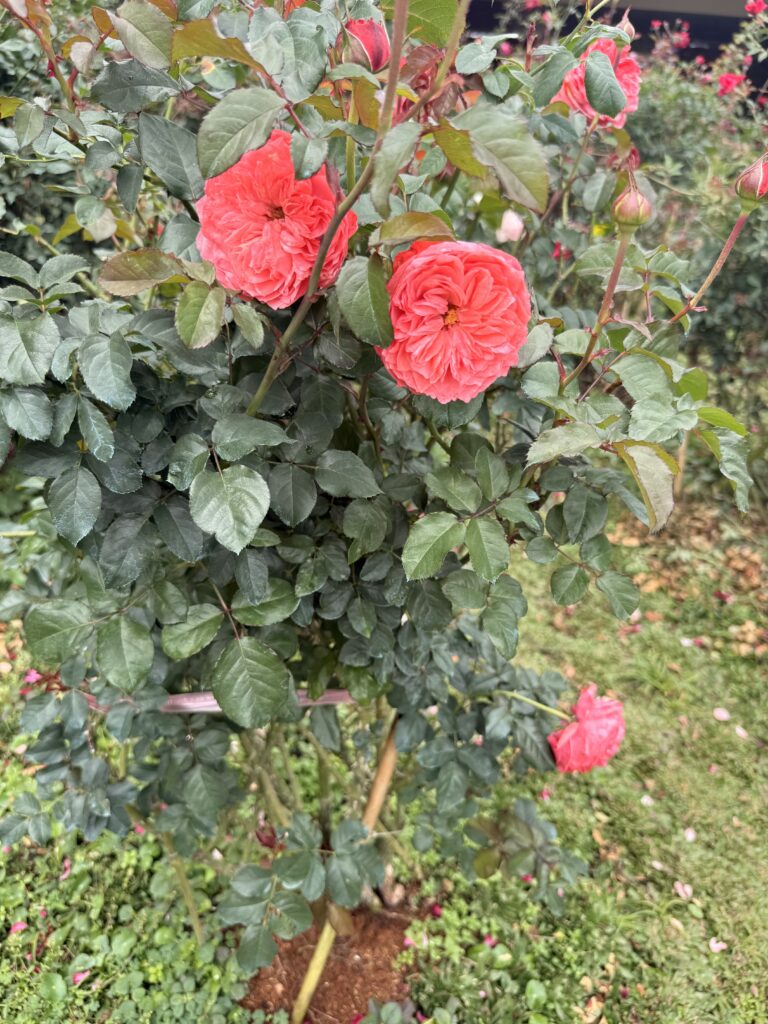
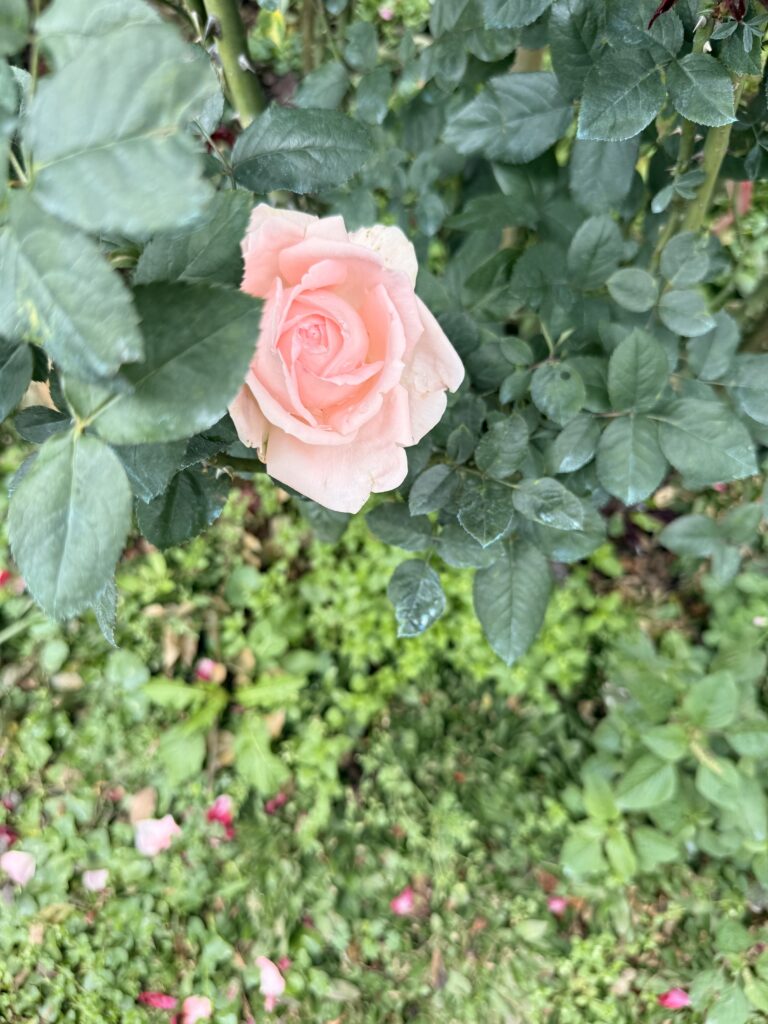
Providing a living for approximately 300 farming families, the village is home to a seemingly endless expanse of beautiful flower species that not only welcomes tourists but also, just as importantly, supplies cut flowers sold countrywide.
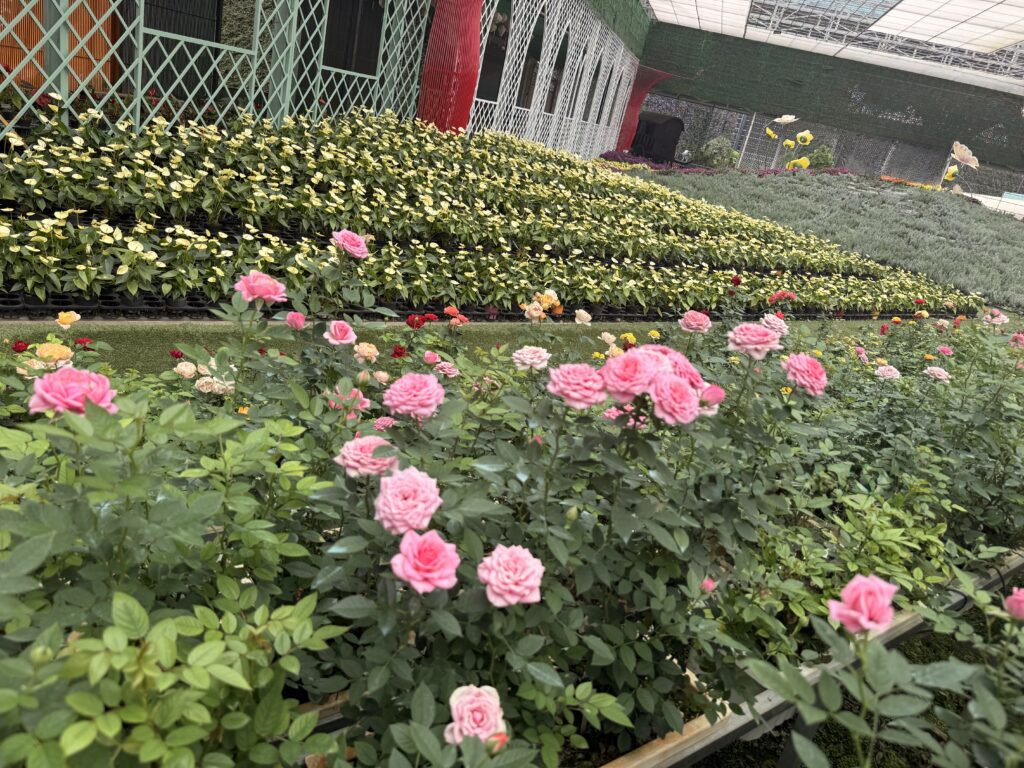
Glorious displays of roses, hydrangeas, dahlias, geraniums, marigolds, petunias, and more, all parading the depth and clarity of their many colours like rare jewels laid out under greenhouses and in the open air.
Easy meandering paths are lined with more flowers in full summer bloom and eye-catching artificial Disney-esque displays that range from kitsch to delightful, making the tour a special, heart-filling couple of hours.
Oh, and for a spot of refreshment, there is a cafe serving coffee, cold drinks, and food to replenish you if, like us, you spend a lot of time wandering through beds of resplendent roses, dragon snaps, hydrangeas, and other stunning floral displays in the scorching summer sun.
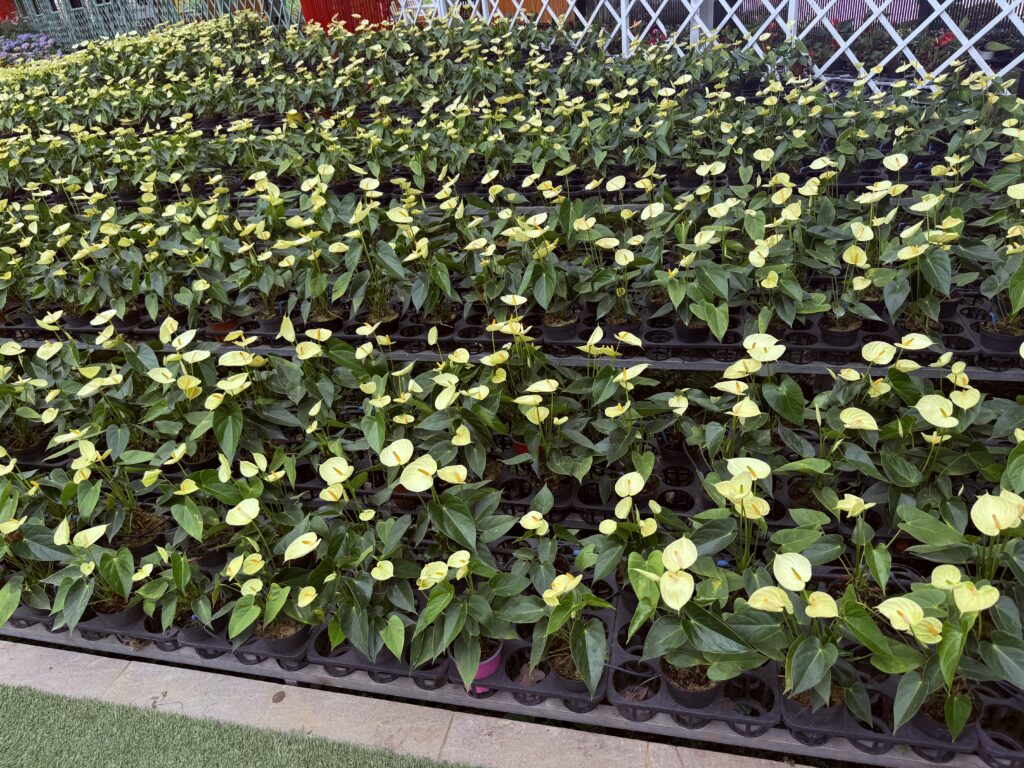
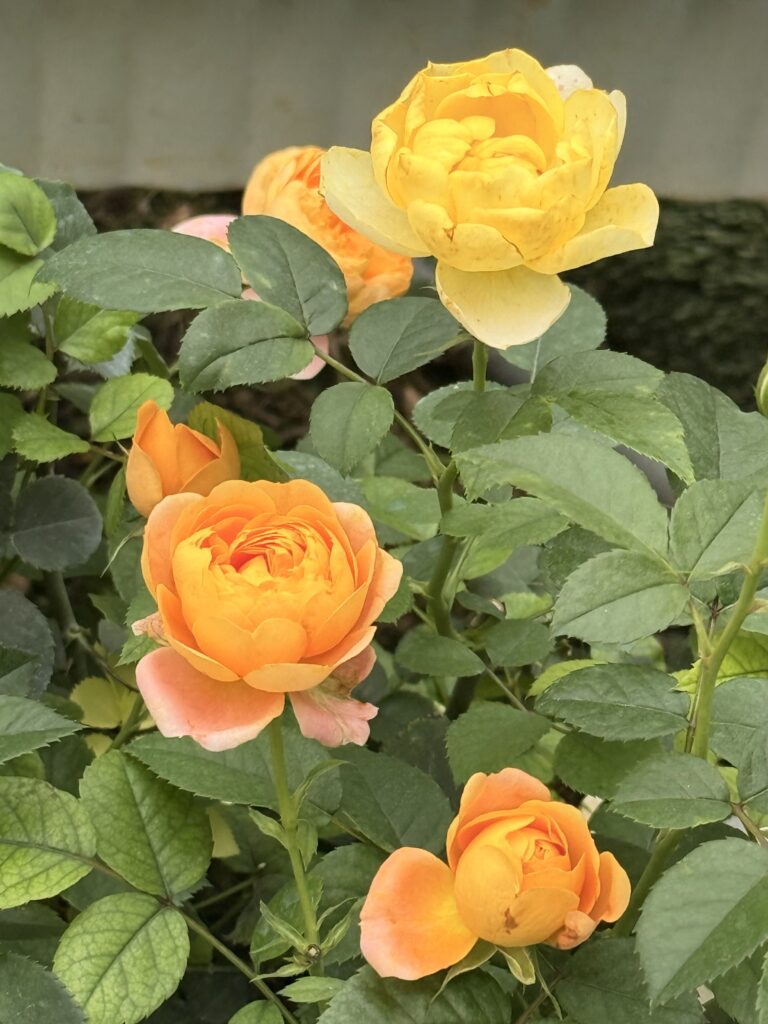
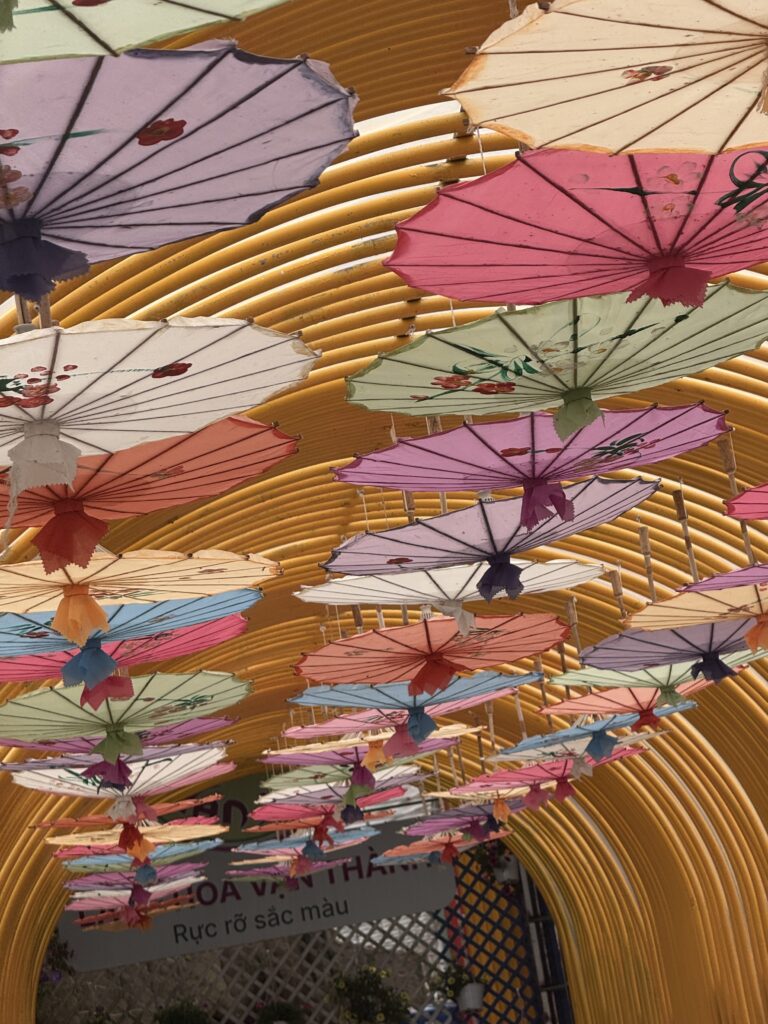
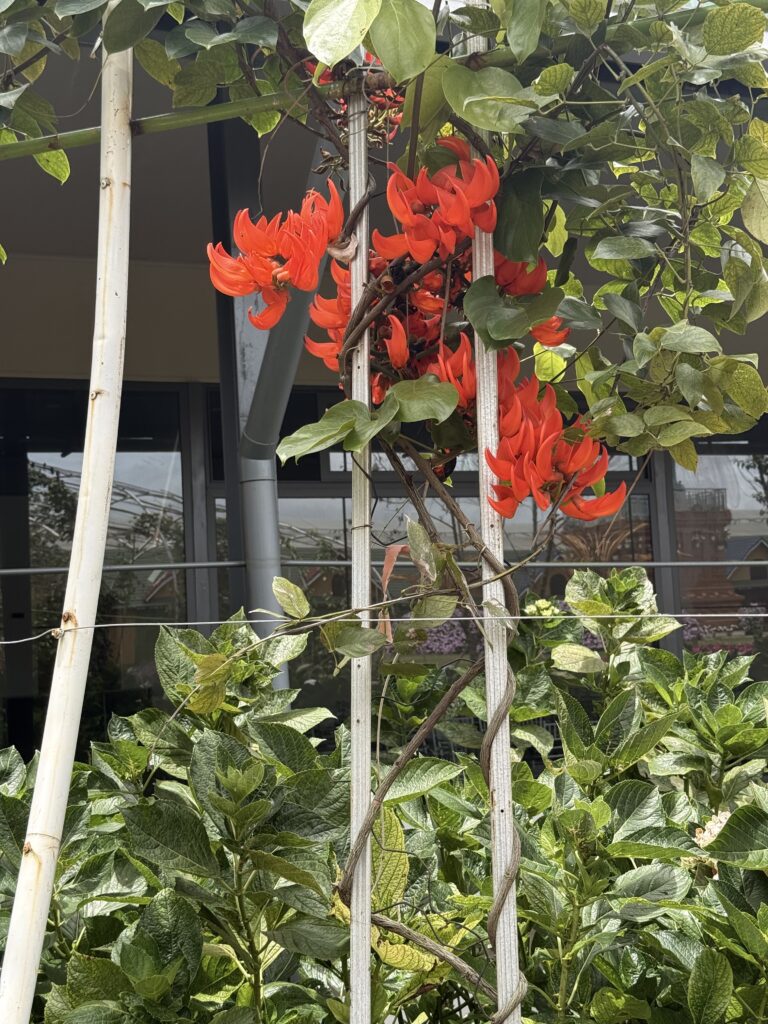
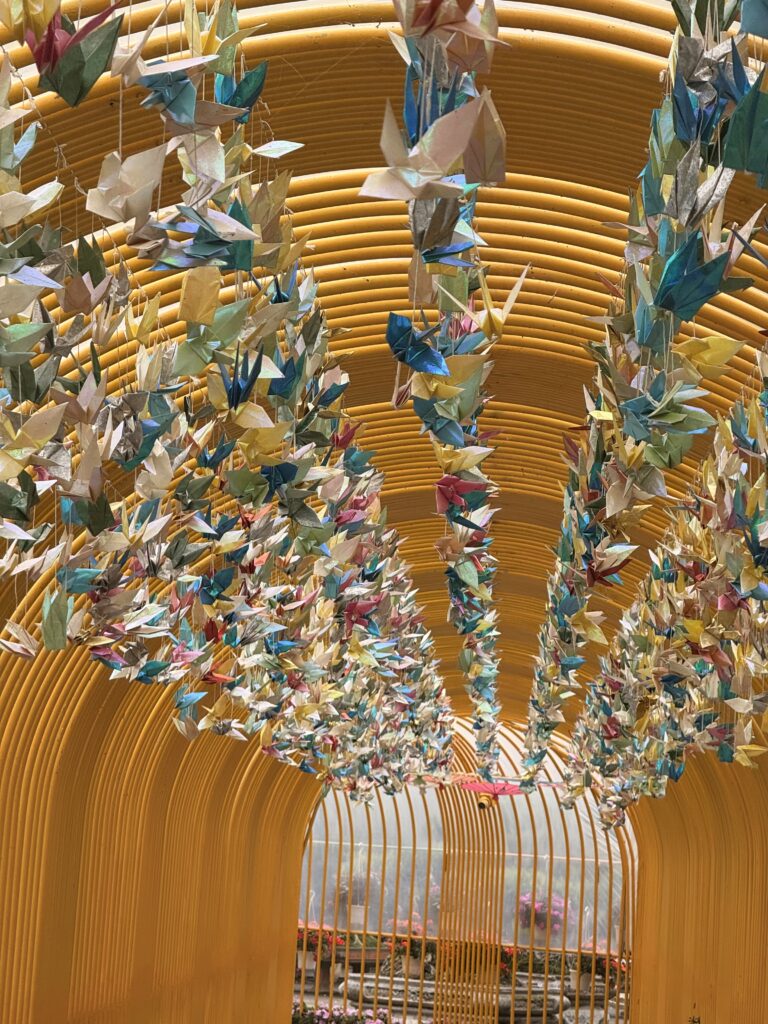
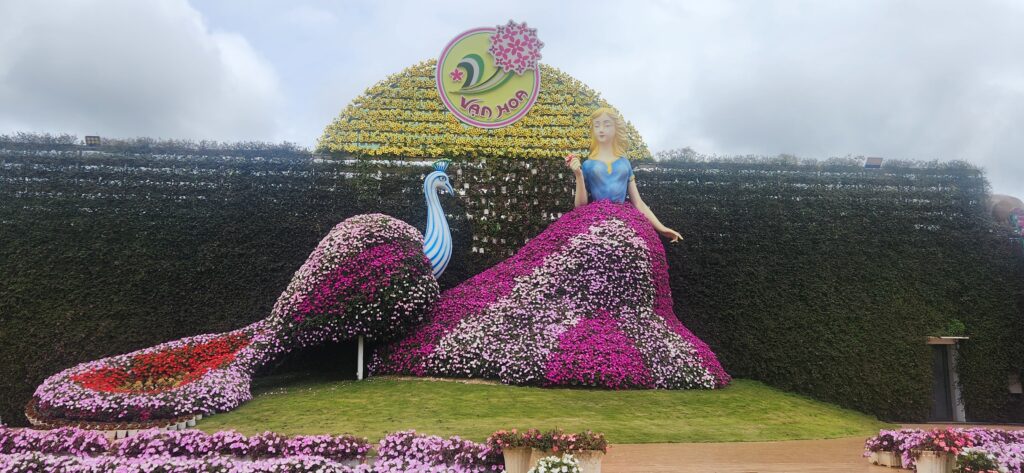
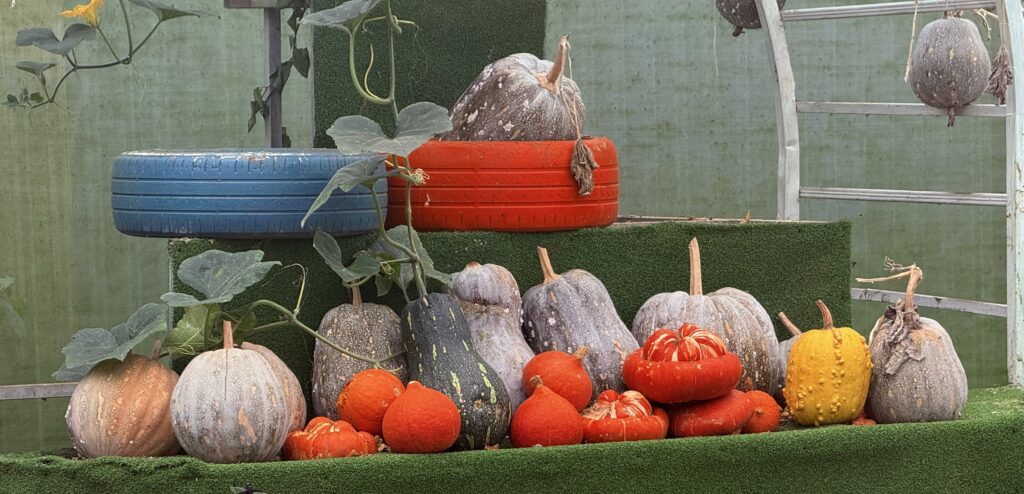
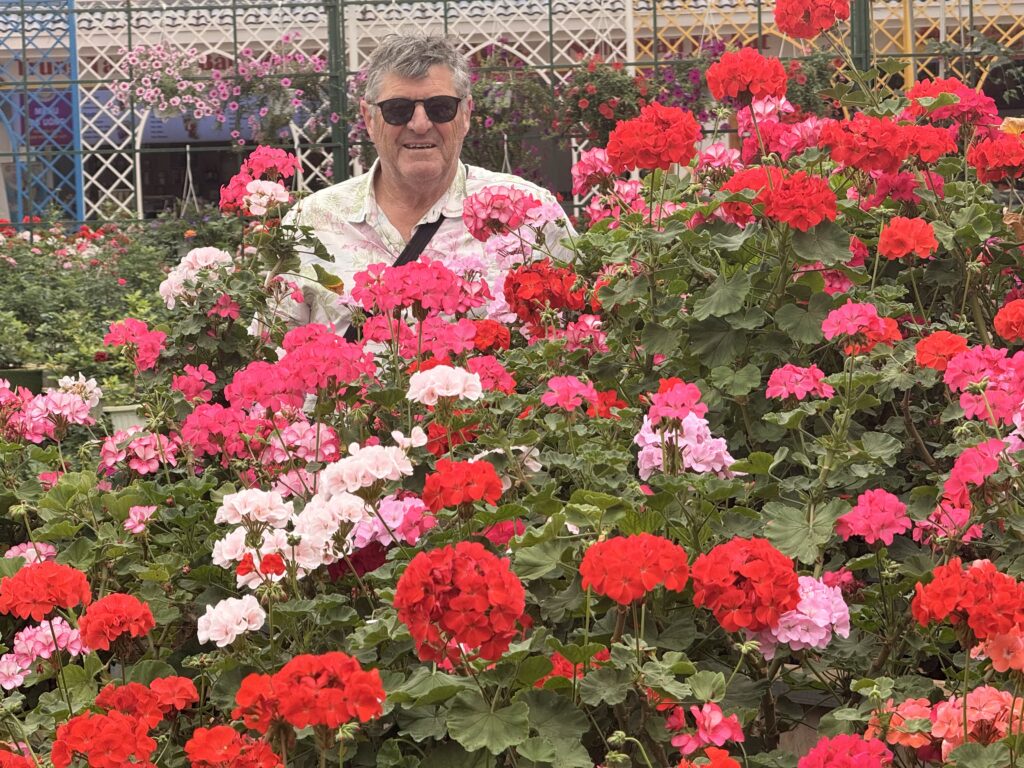
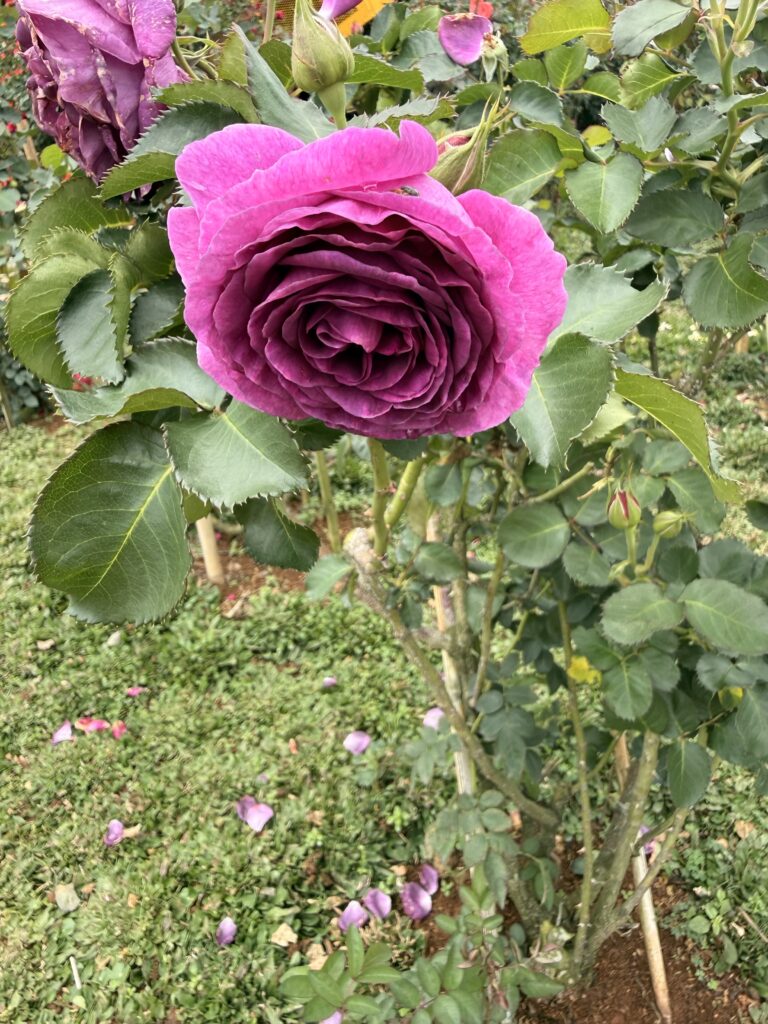
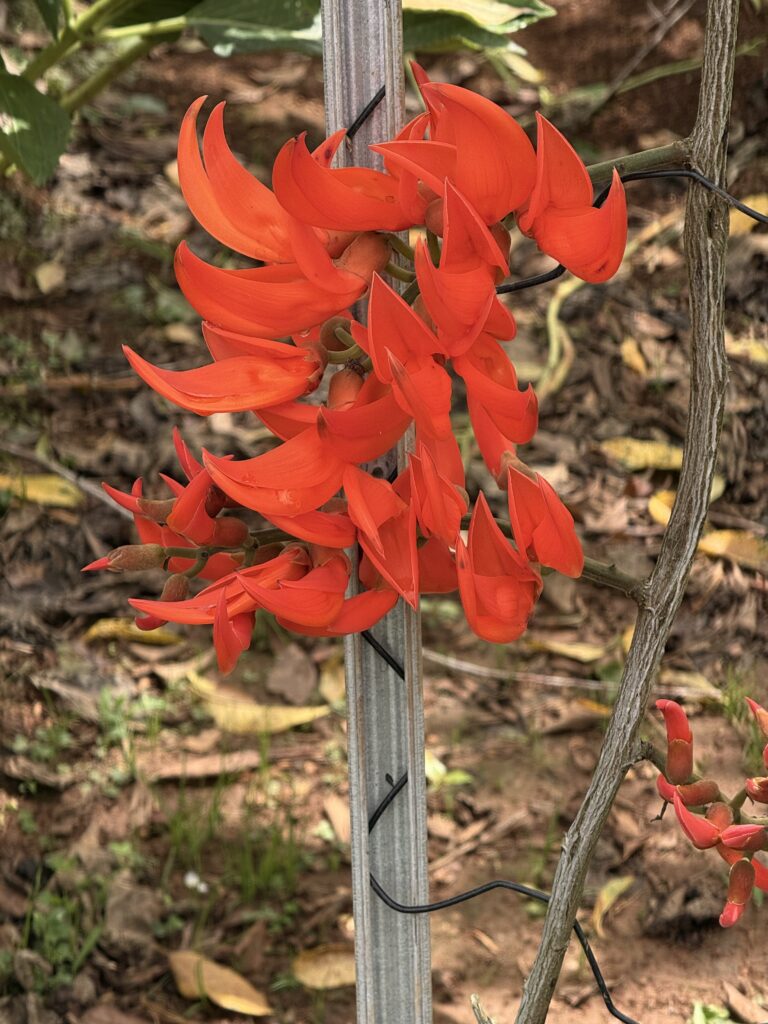
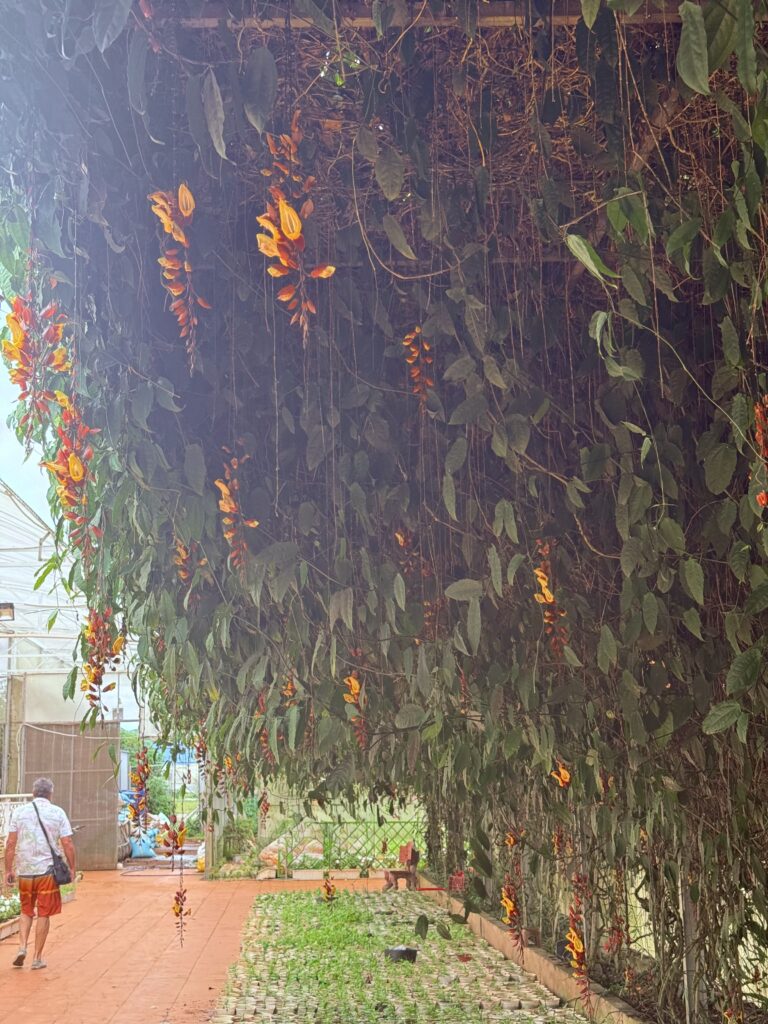
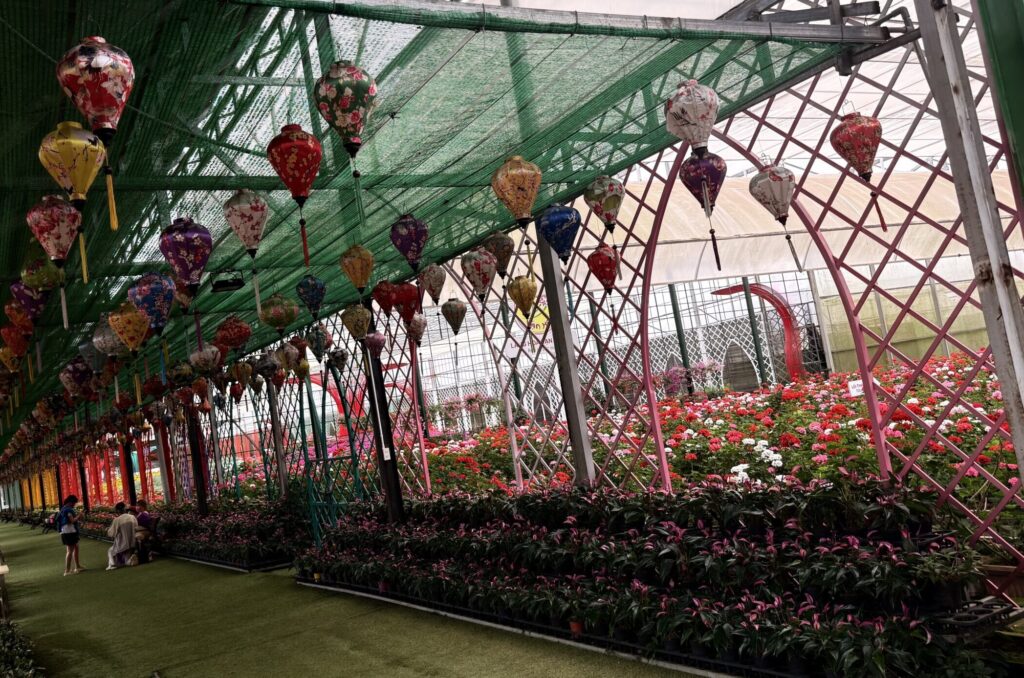
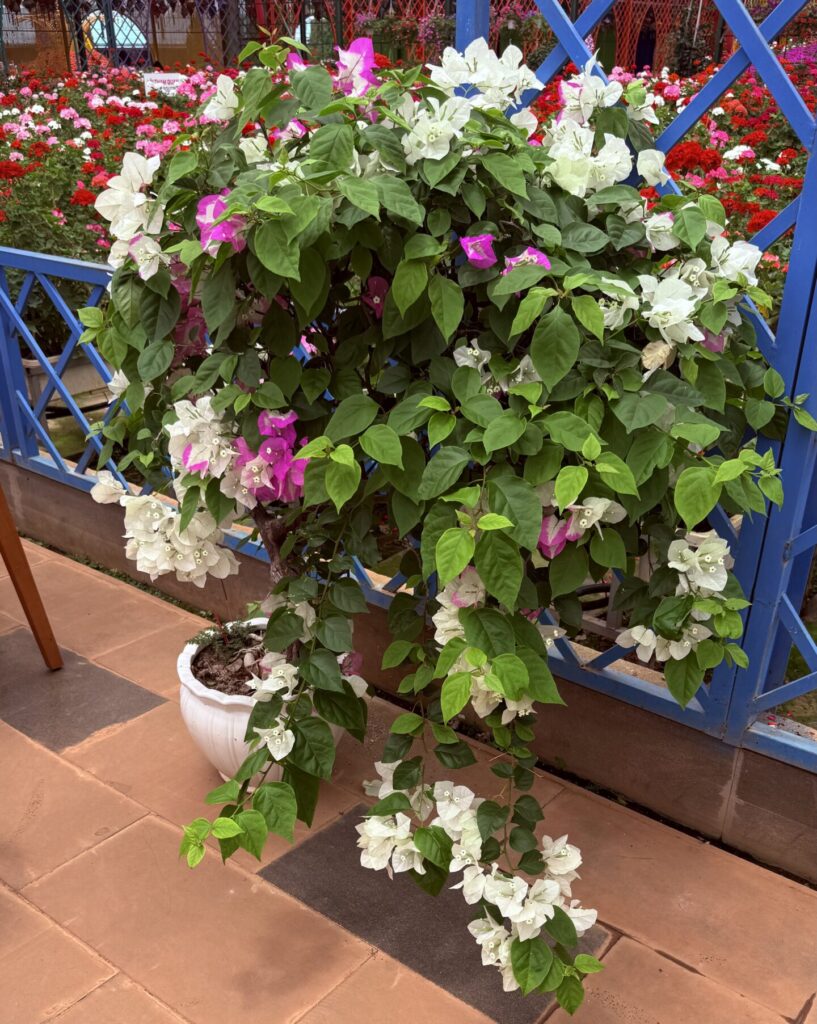

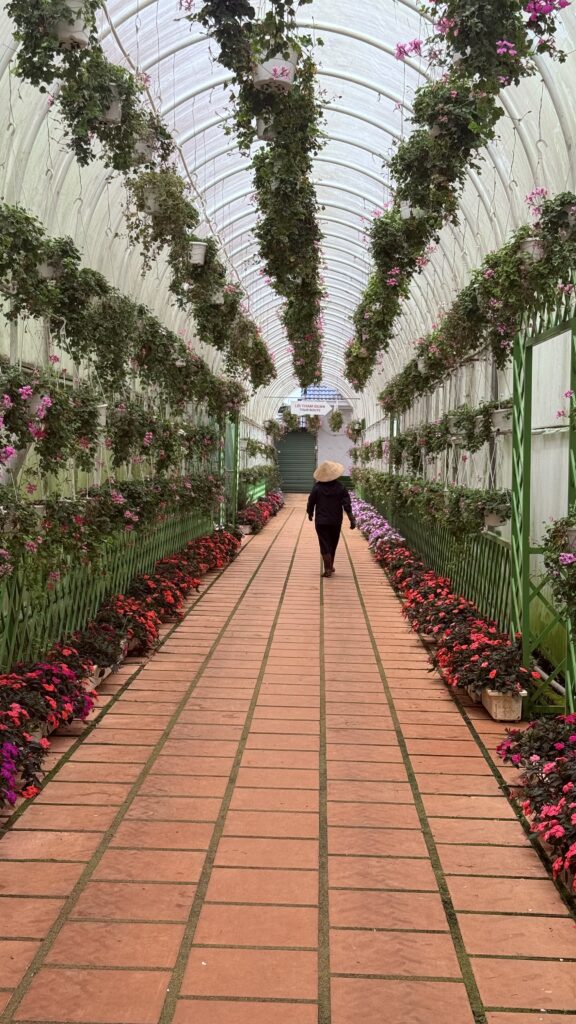
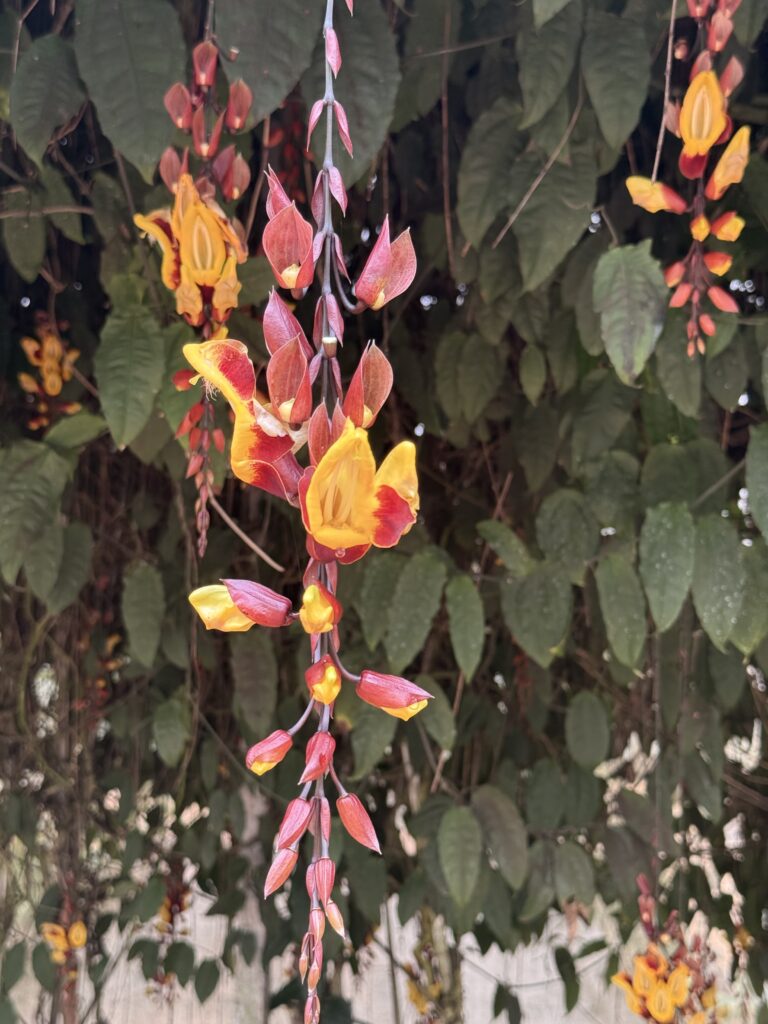
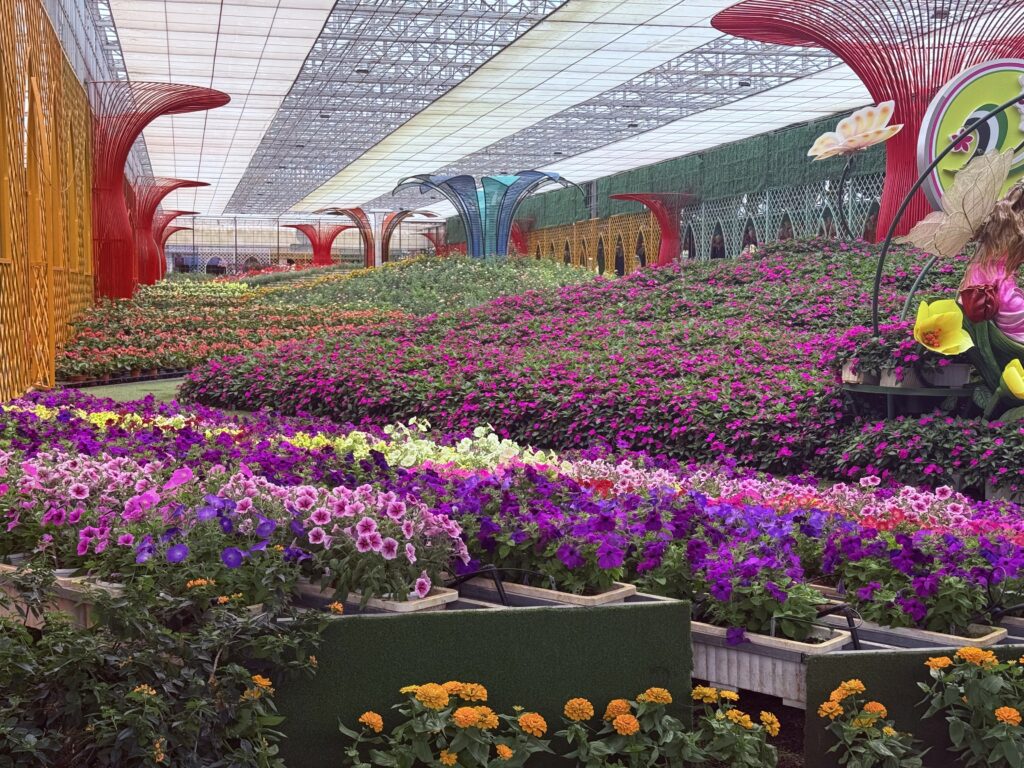
Tickets are for adults (approx.) NZ$7.00 each and are available on-site.
4.
This attraction was recommended by a friend, so we grabbed a “Grab” and took the approx. 8 km ride from Dalat city to this awe-inspiring pagoda, which is more than “just another temple”. Built in 1952 and renovated by the abbot in 1990, this incredible building is a must-see.
Elaborately mosaicked with pieces of sparkling glass, glistening pottery, shiny coloured porcelain, and embellished with enamelled, beautifully painted dragons, effigies of various Devas, and “other-world creatures”, this Pagoda is a living place of worship for local Buddhists.
For me, it was humbling to see so many everyday people, including children, taking time out to pop into the Quan Am Hall and worship at the feet of the 18-metre-high Avalokiteshvara Bodhisattva (Lady Buddha).
She stands so high that it’s hard not to feel awestruck, not just because of her size, but because she is not only cast in gold but is completely covered in 600,000 dried flowers, making for a magnificent display and a very obvious indication of how highly regarded she is by her Sangha (community).
The Pagoda has many levels, with interesting carved stones and multi coloured mosaic-style tiled stairways winding to and from a variety of curious, eye-catching sights.
For example, on the second floor, we spent quite a long time watching local children write notes (prayers, wishes and family names) on small pieces of yellow paper, glueing them with provided glue pens onto the bell and then watching them strike the bell three times with a huge wooden mallet suspended by a pulley rope. It’s believed the vibrations carry the prayers straight to the heavens and Buddha. I hope so.
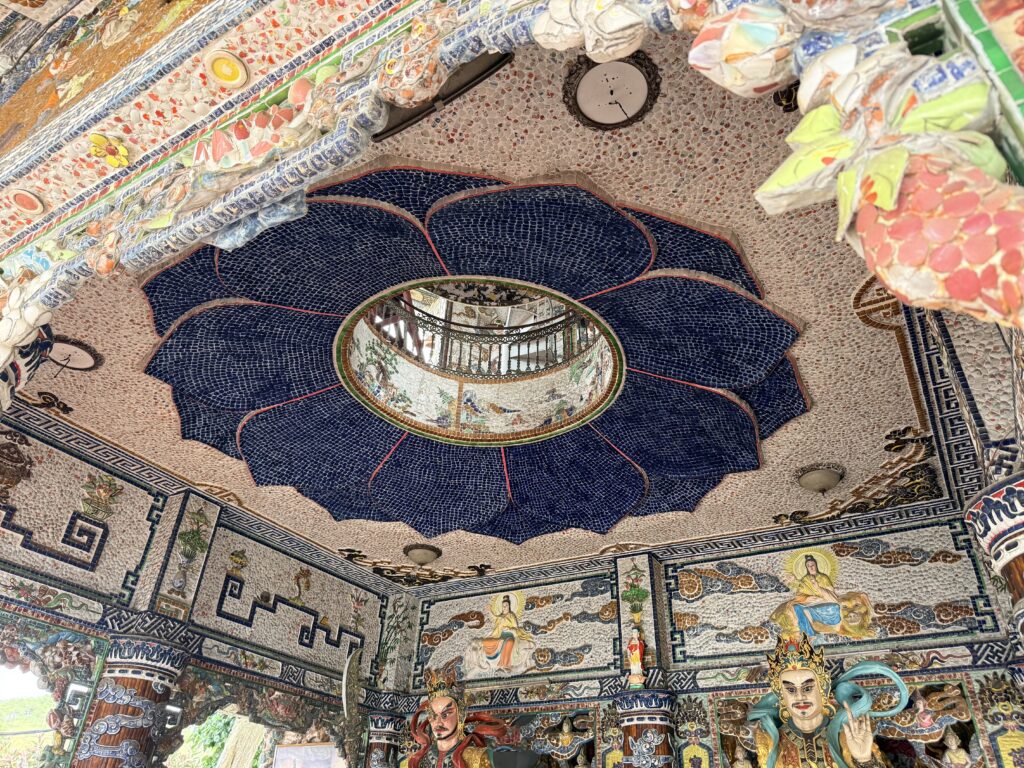
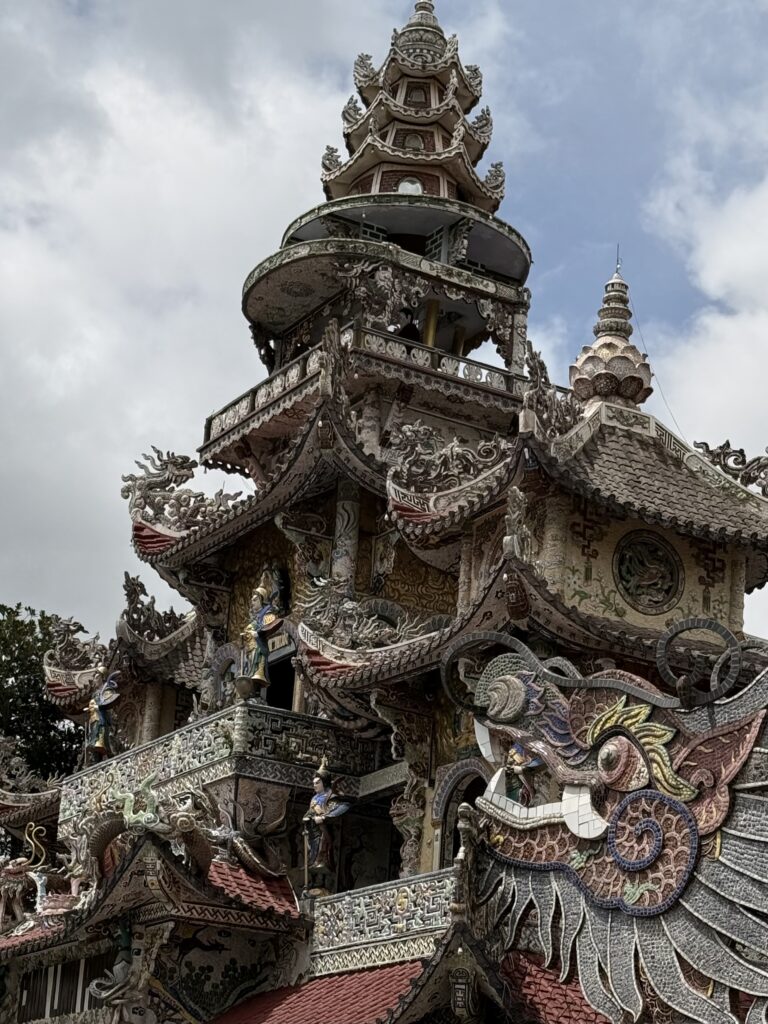
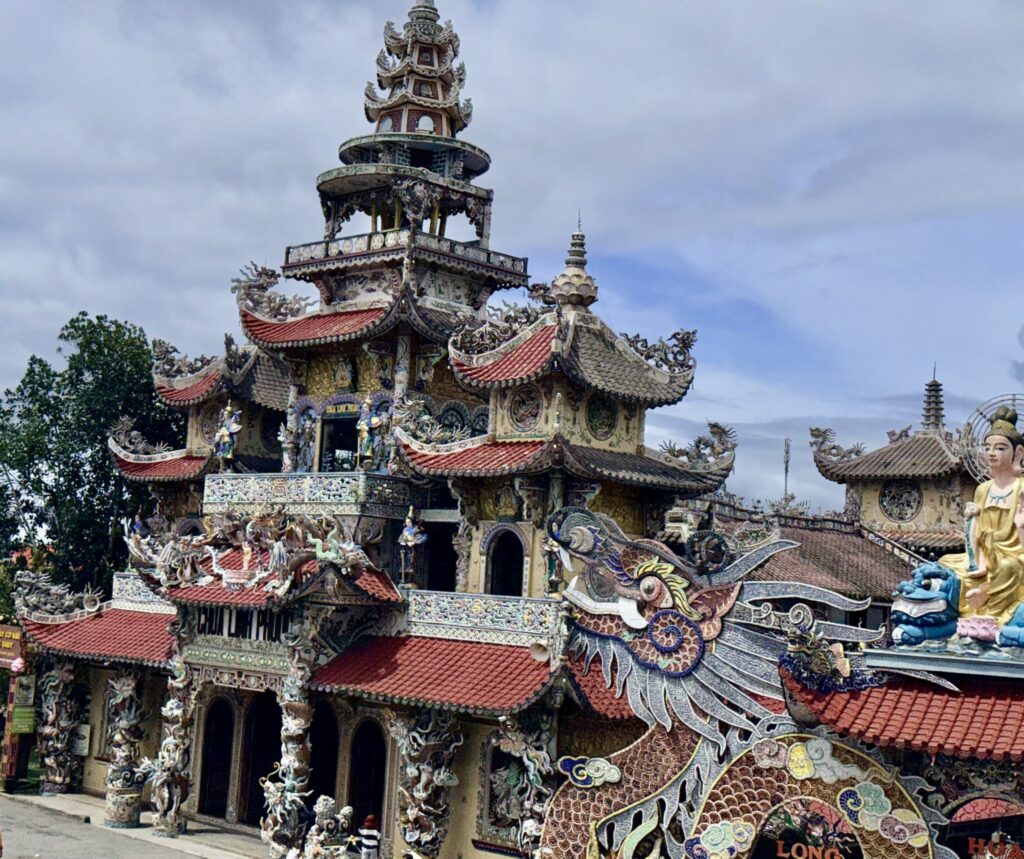
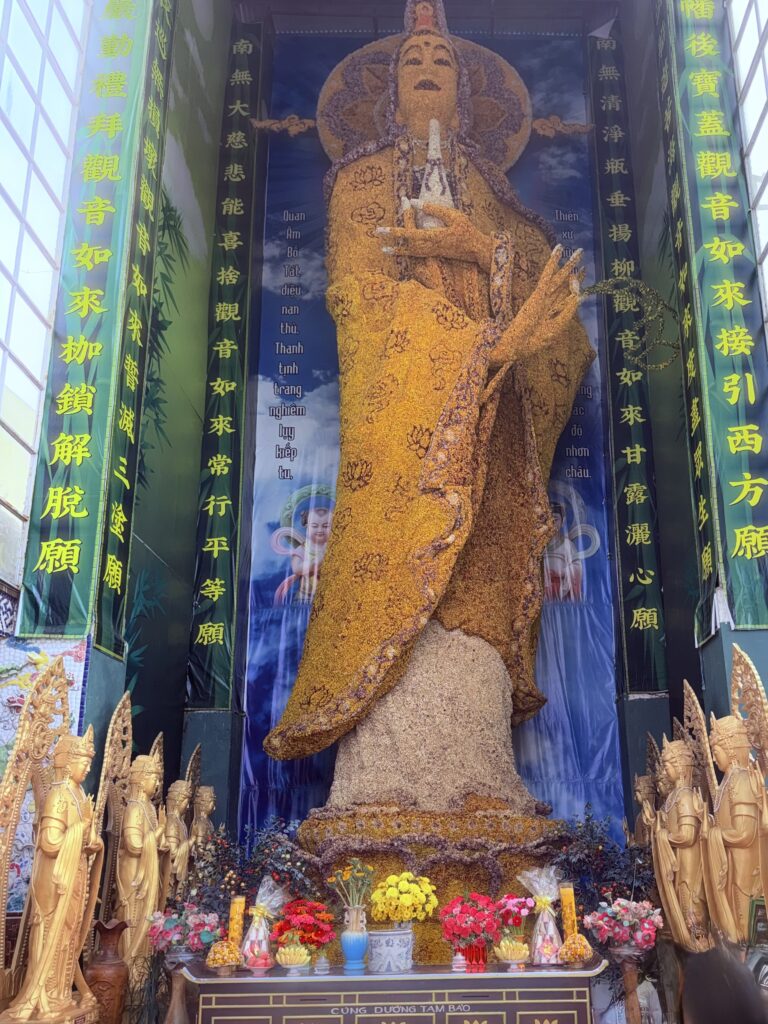
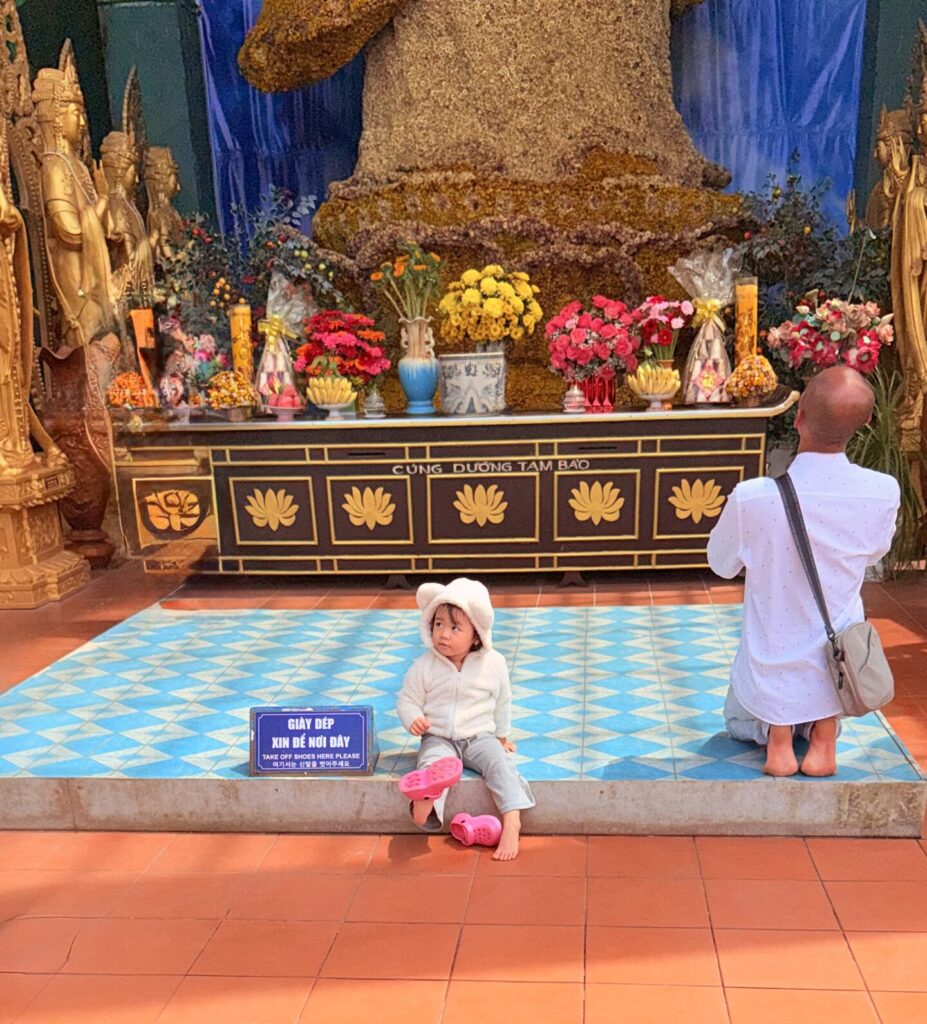
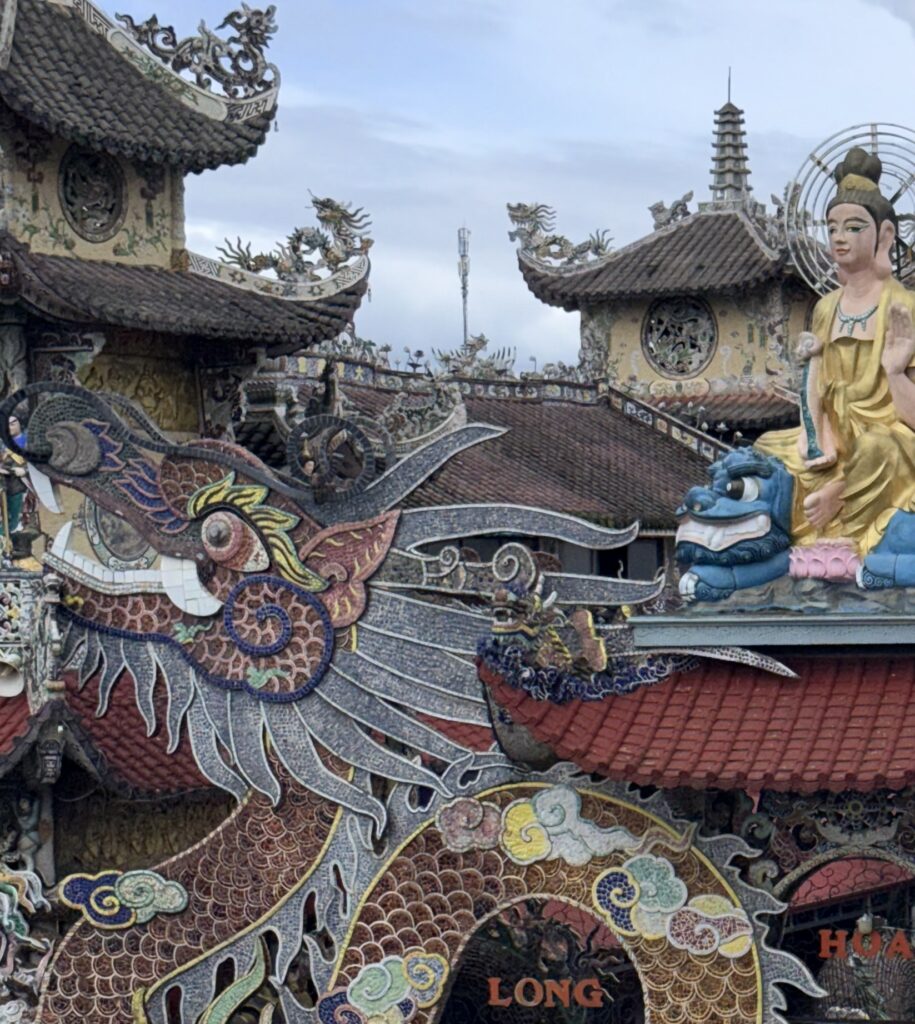
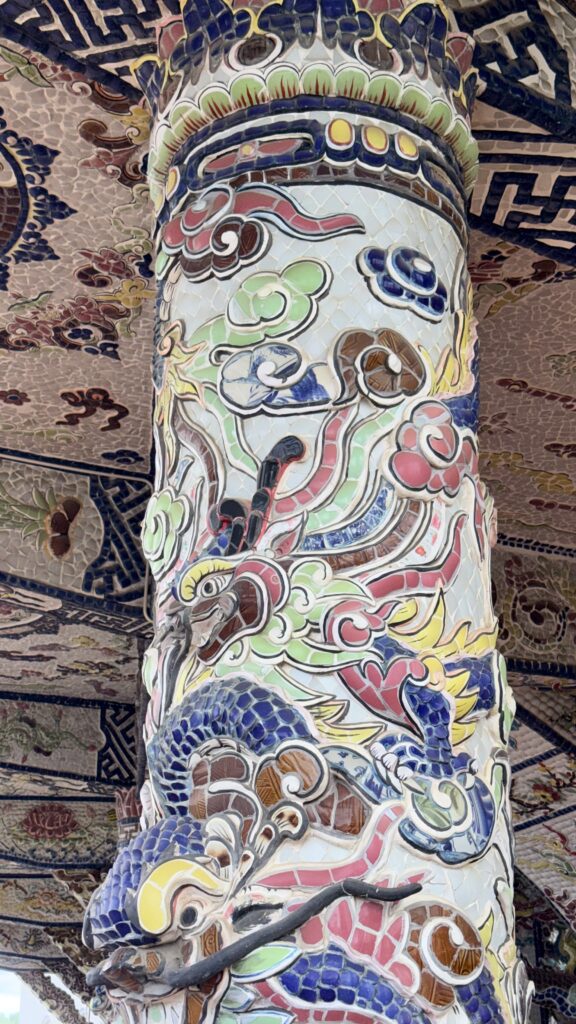
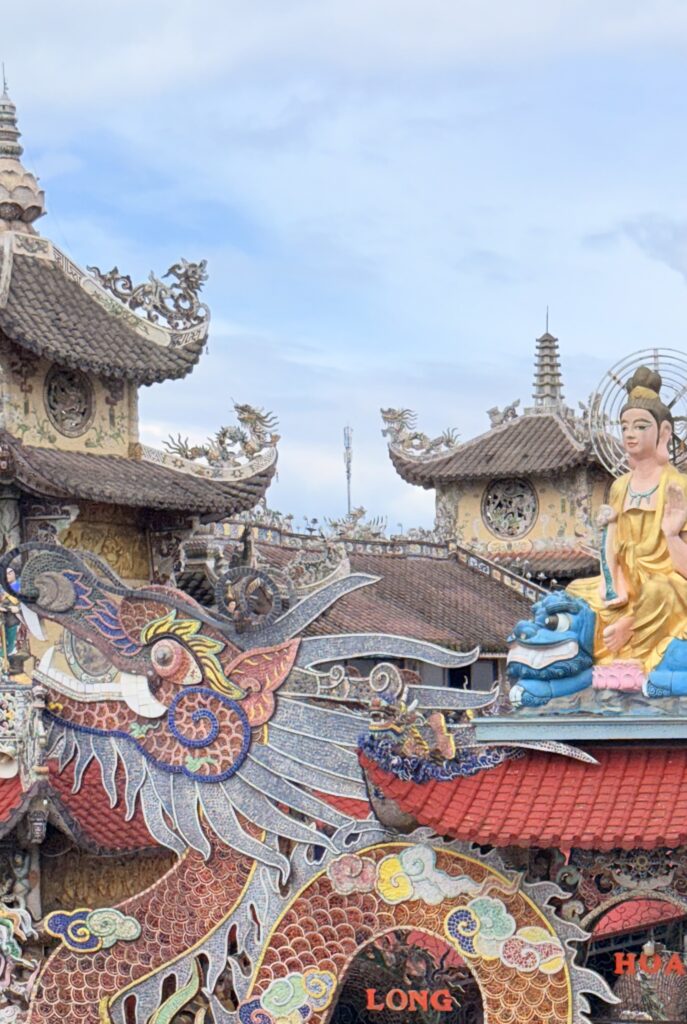
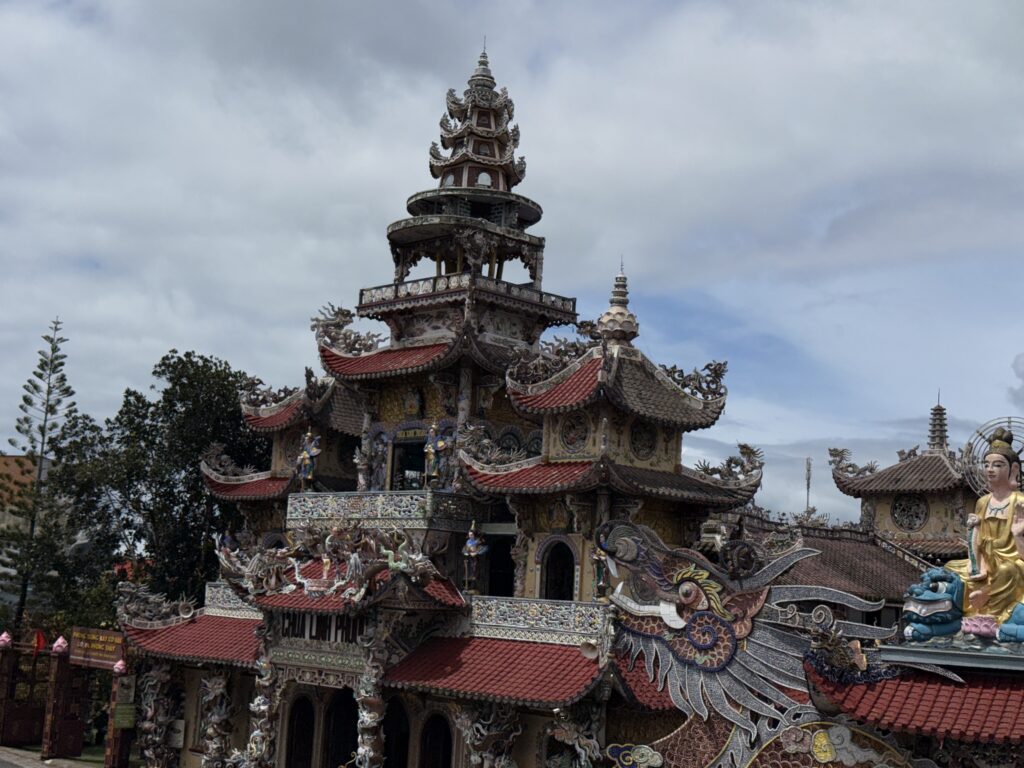
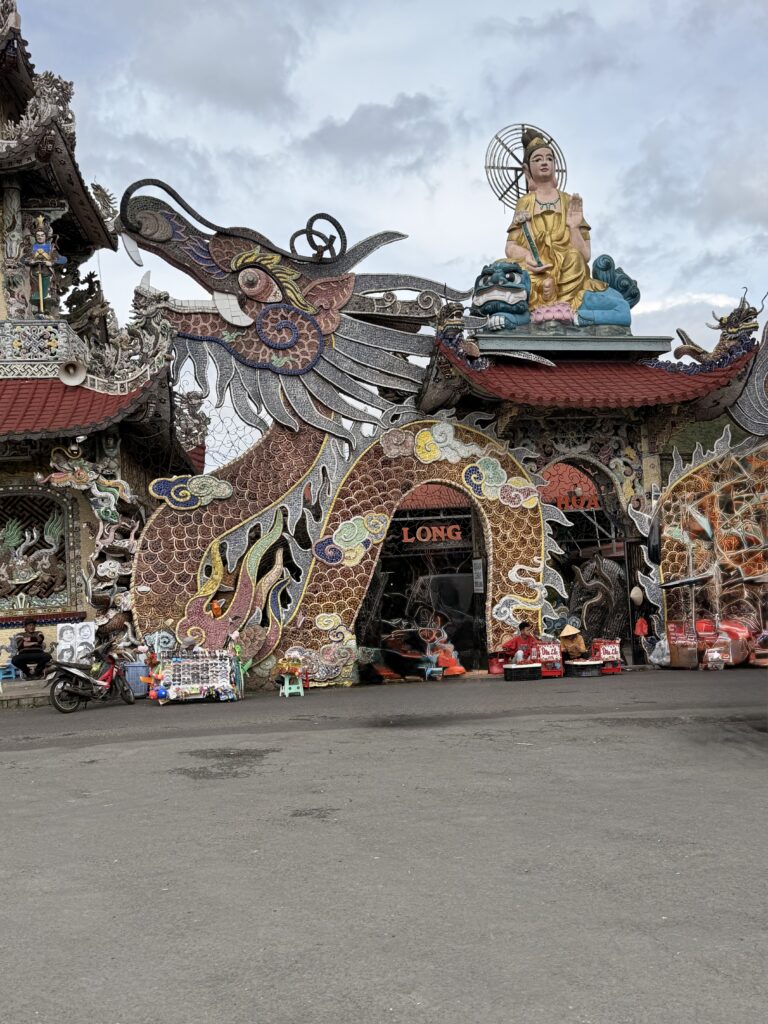
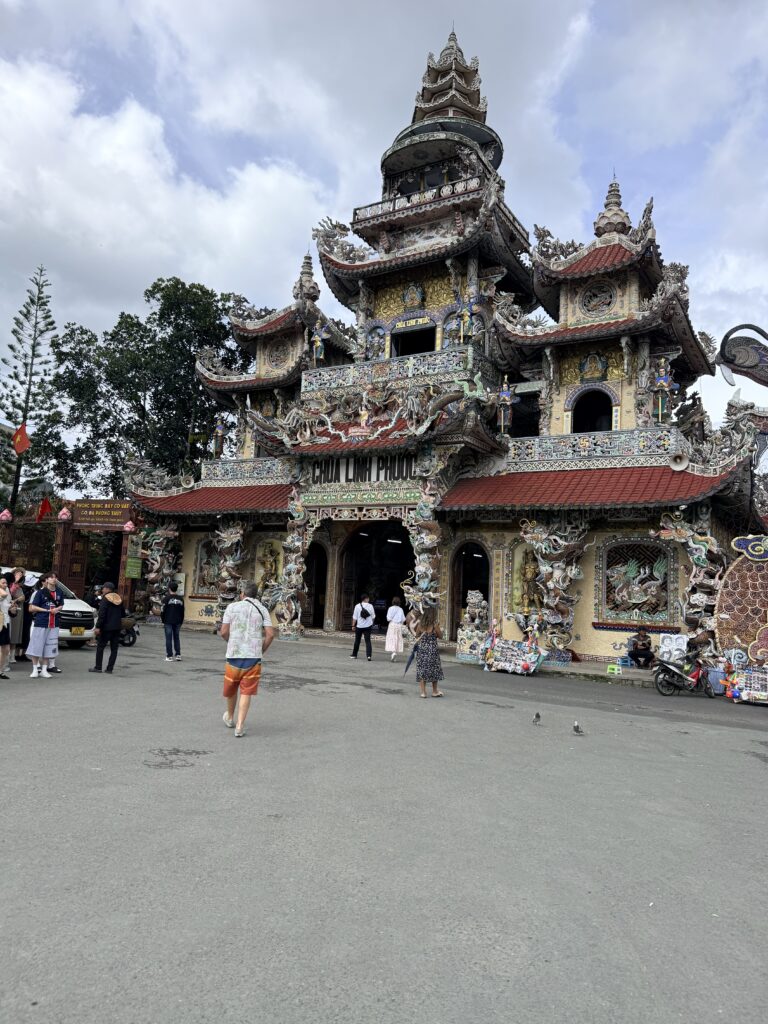
Interestingly, the Pagoda, for all its fascinating and quirky appeal, also houses a large, practical ground-floor day market and food hall that stays busy serving day trippers and locals.
Entry to the Pagoda is free.
5.
“The Florest” – Flowers in the Forest
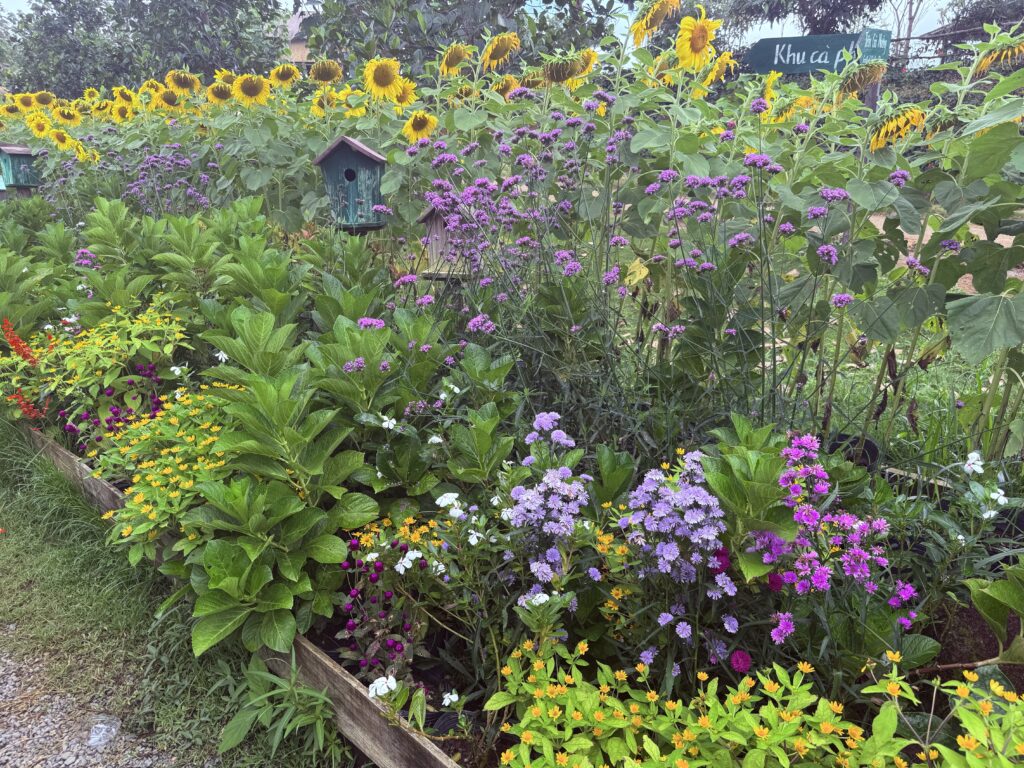
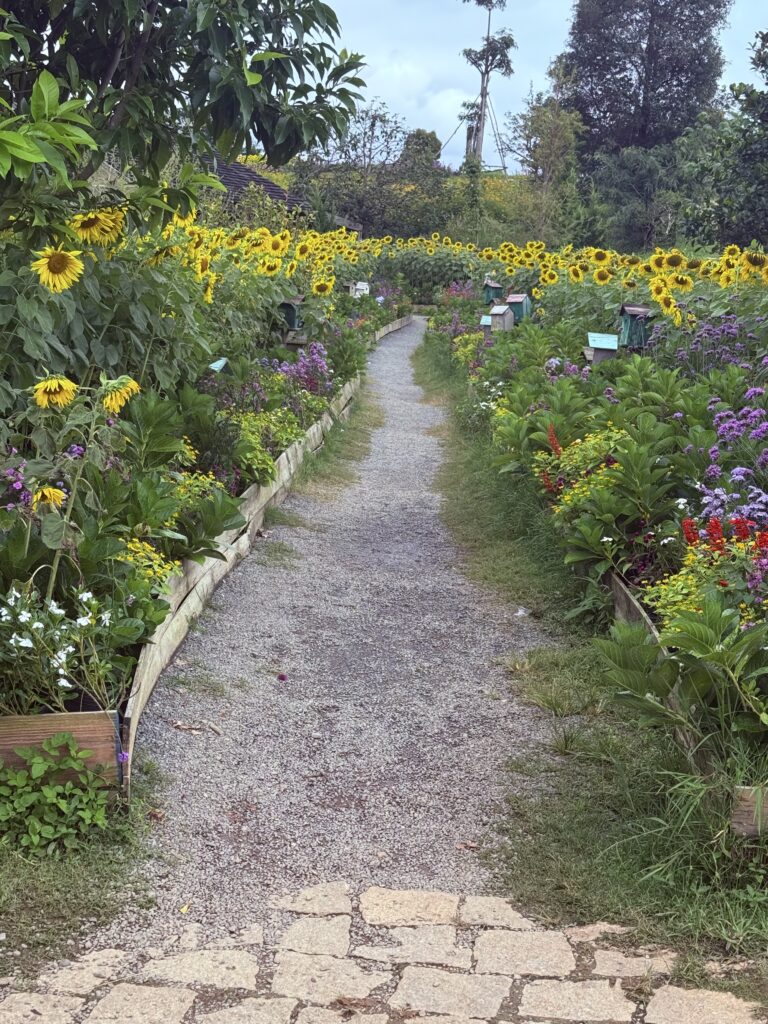
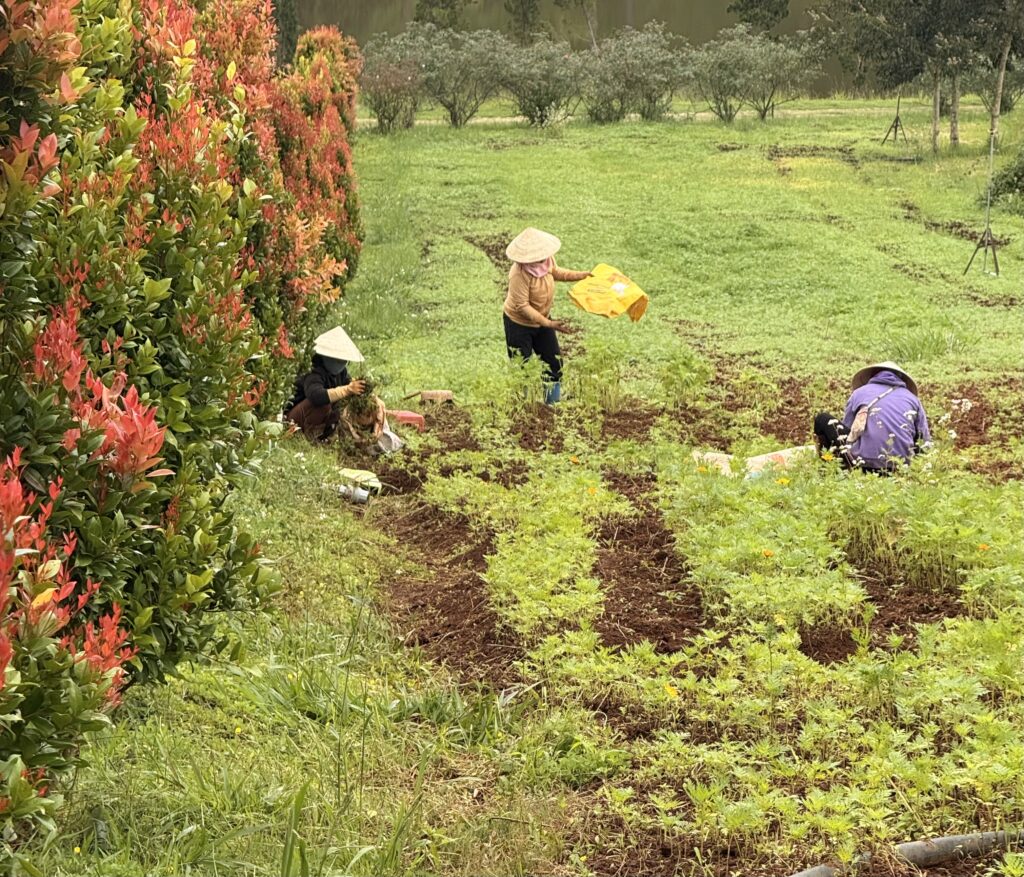
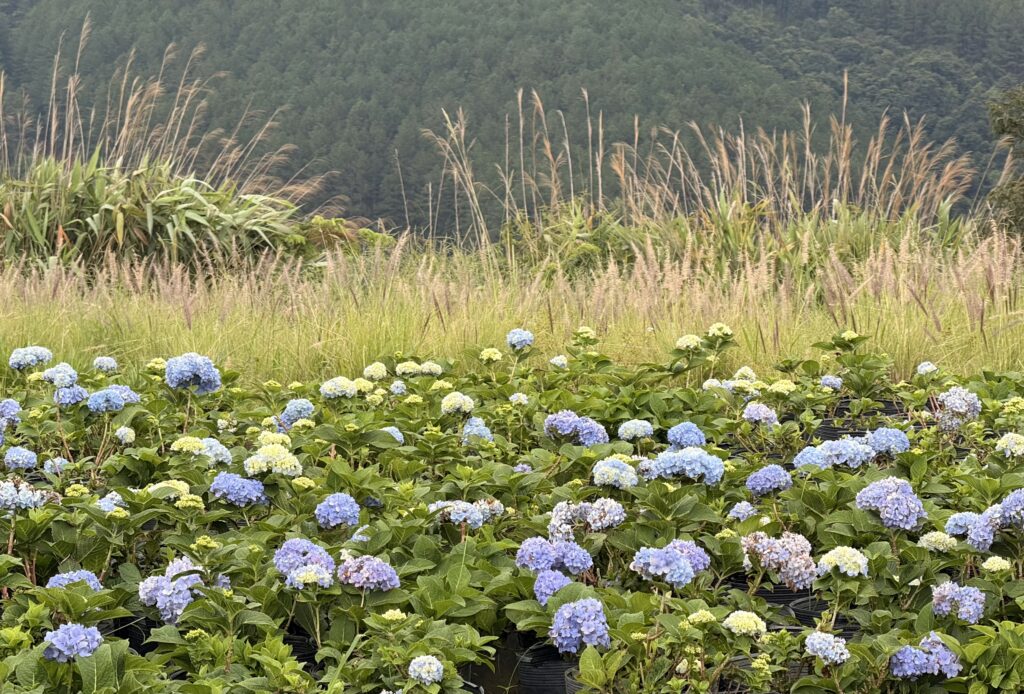
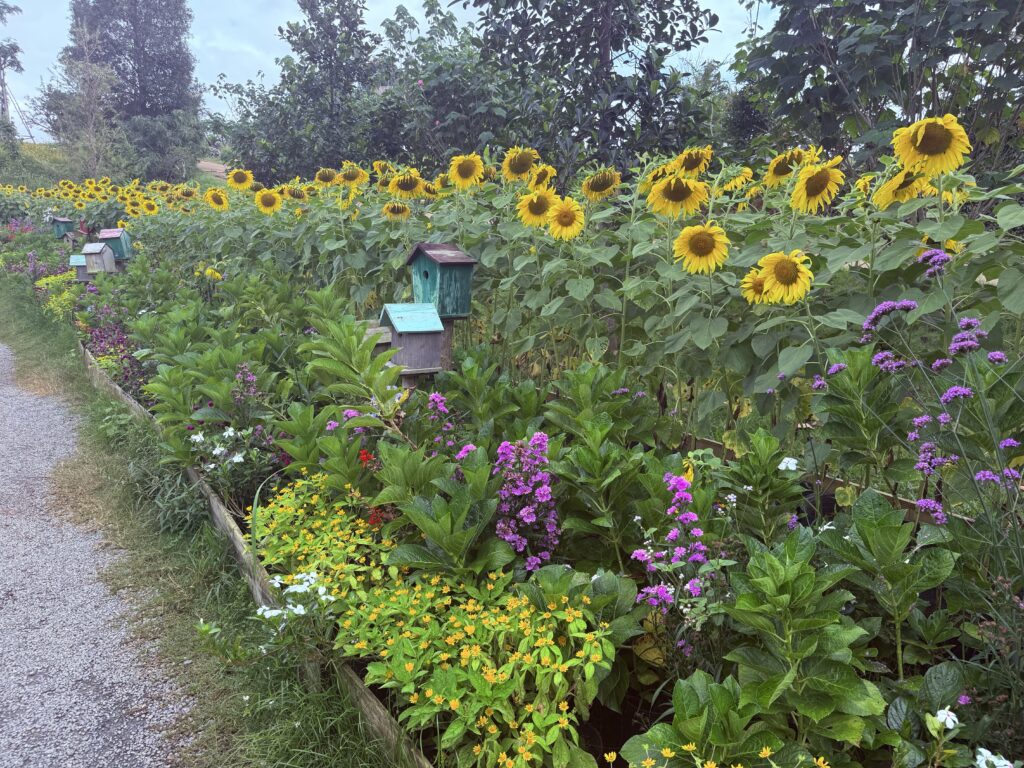
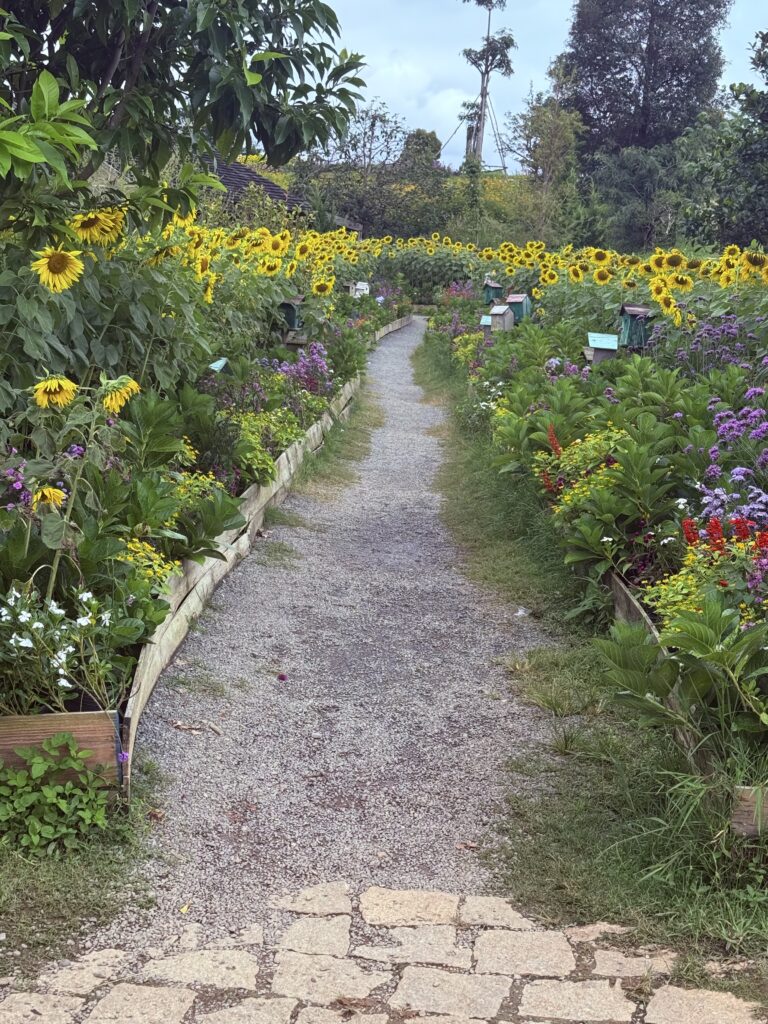
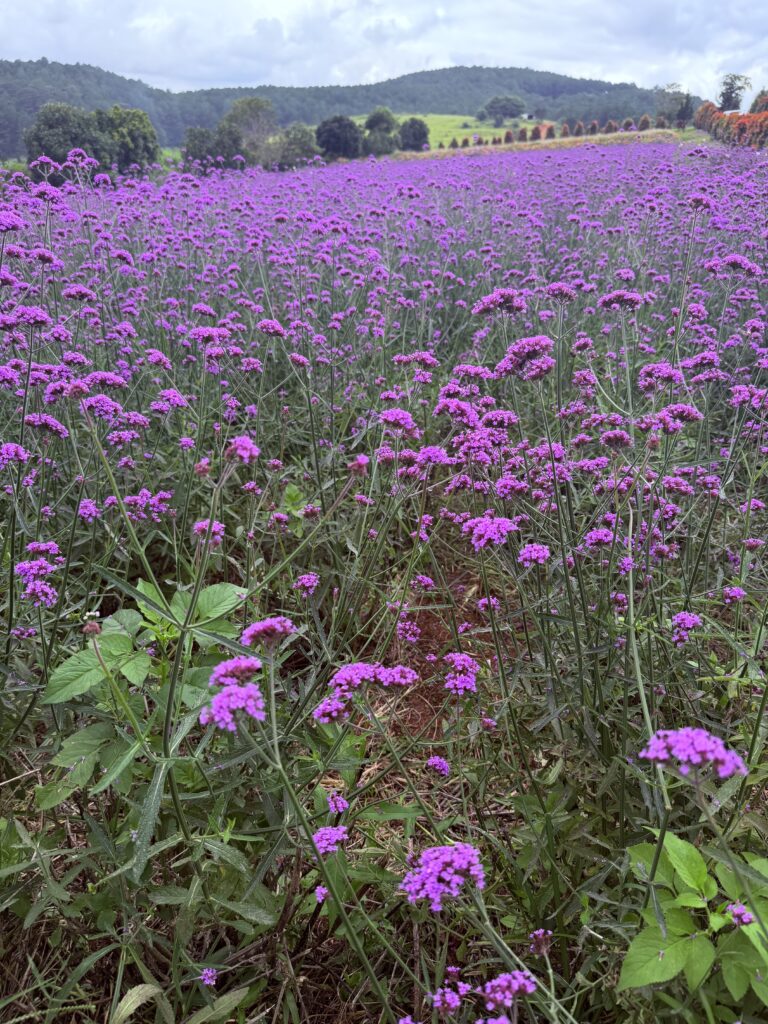
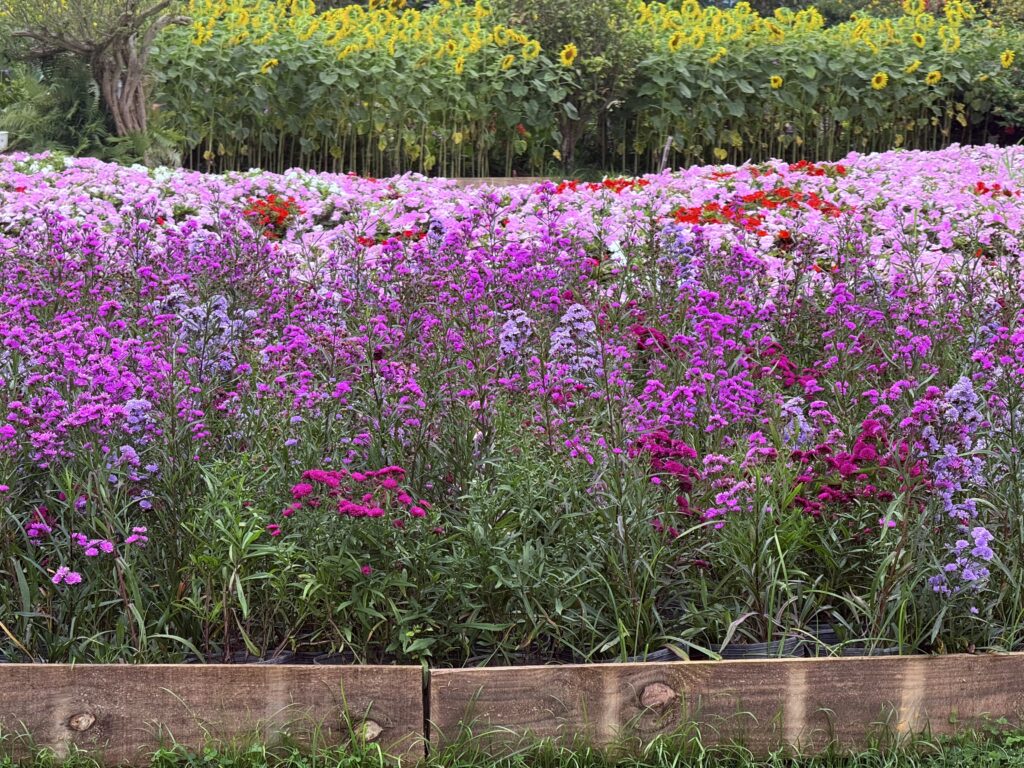
As far as exploring an outdoor flower garden and forest, this one has to take the cake. It’s exquisite and oh-so romantic – it’s a good idea to dress for the countless photo opportunities you’ll encounter.
The day we decided to go, we took a Grab and headed into the bucolic countryside, inland toward the Central Highland mountains. The ride is around 30 minutes long, and during that time you’ll pass acres of coffee bean plants – a major industry in Da Lat. The glossy green coffee bean trees are a spectacular sight as they grow down steep hillsides. You’ll see verdant flatlands producing an array of fruits and vegetables; original traditional villages with little peaked roofs and doors opening onto the street; higgledy-piggledy open-sided shops selling a variety of homegrown wares; barefoot children roaming while motor and pedal cyclists loaded up with goodies compete for room on the narrow country roads.
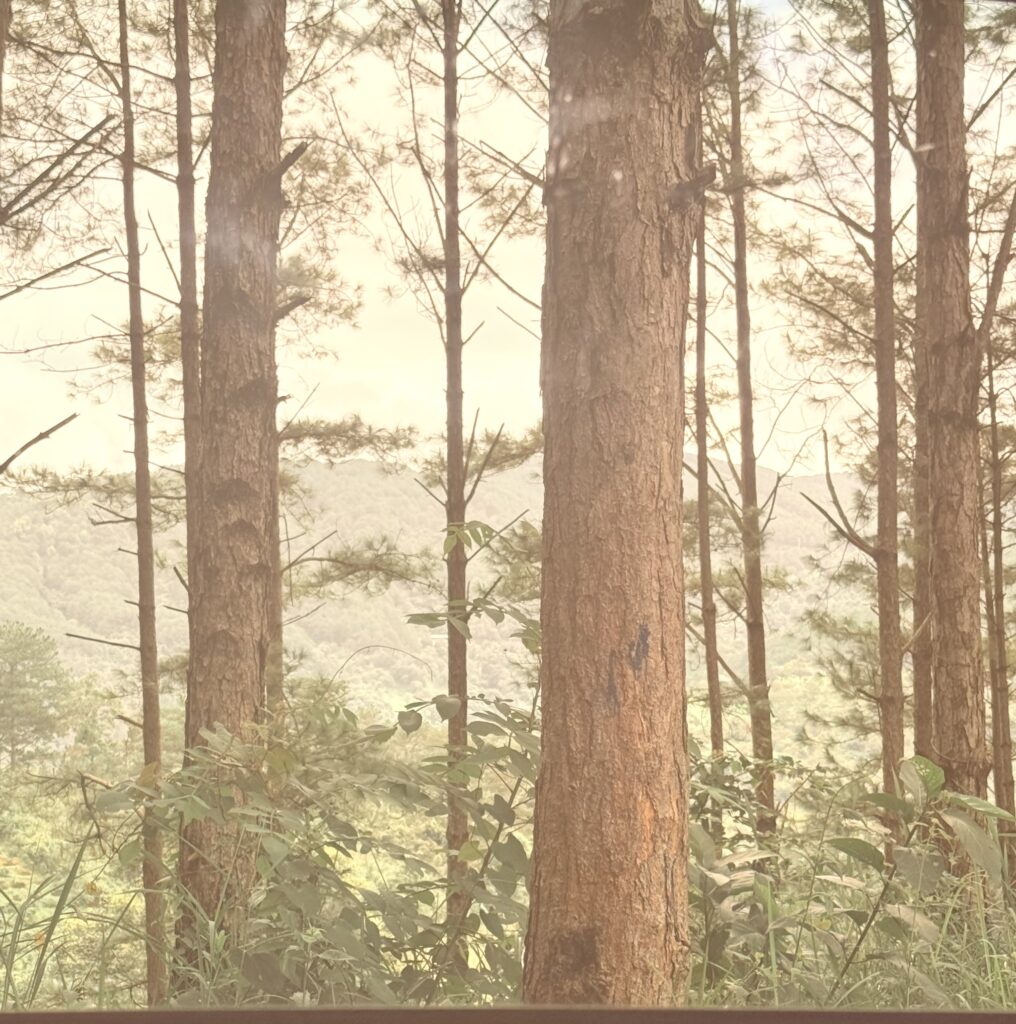
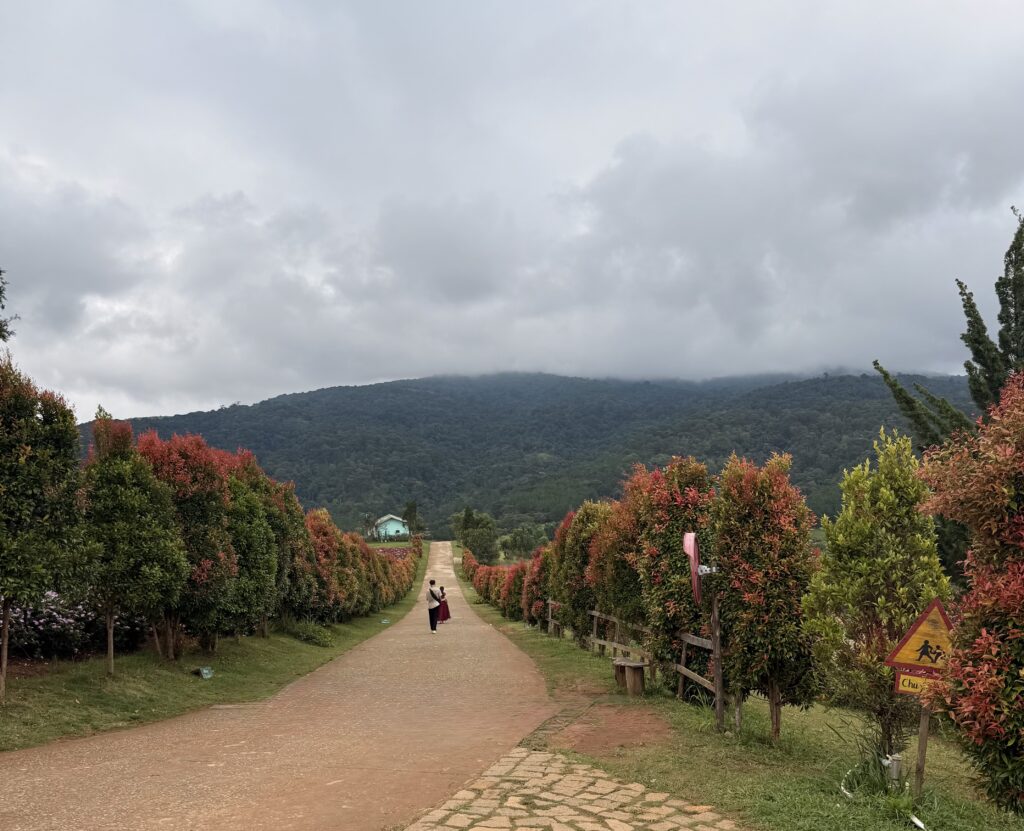
As we neared our destination, the car reached the entrance to Flowers in The Forest, and we drove onto a road lined with majestically tall Kesiya (locally known as thong ba la) pines, dappled with gentle light. The trees’ strikingly slim, straight trunks reached high, stretching skyward, providing light shade while letting sunbeams glow softly across the unsealed road and trees, conjuring a sense of fairytale magic.
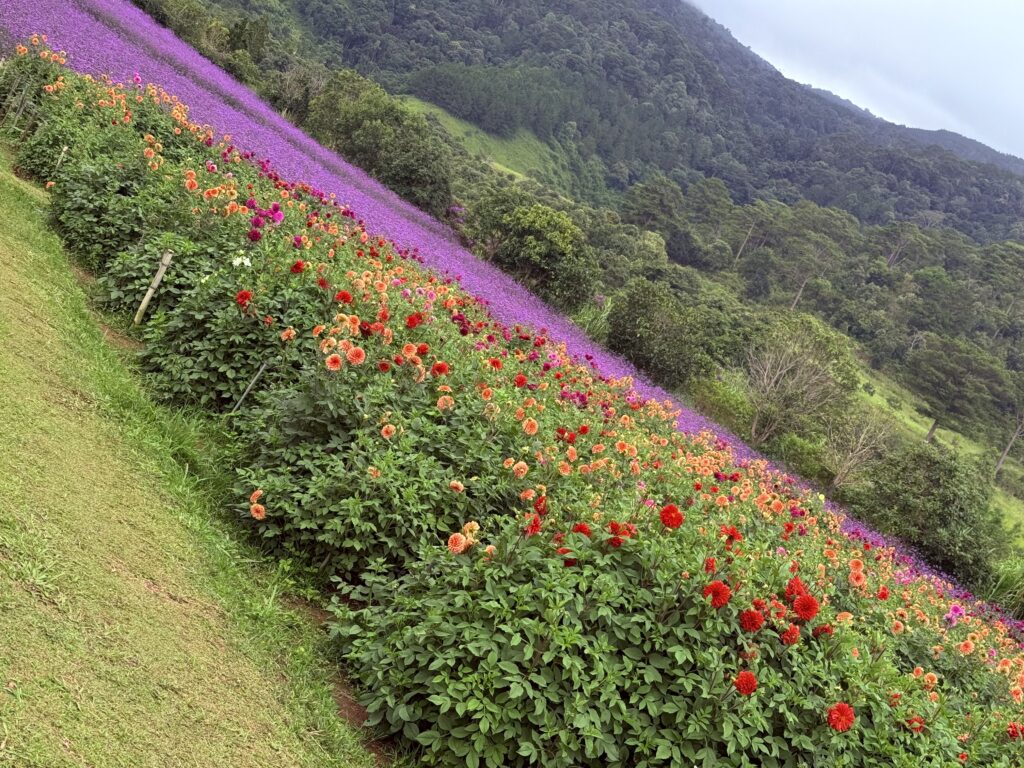
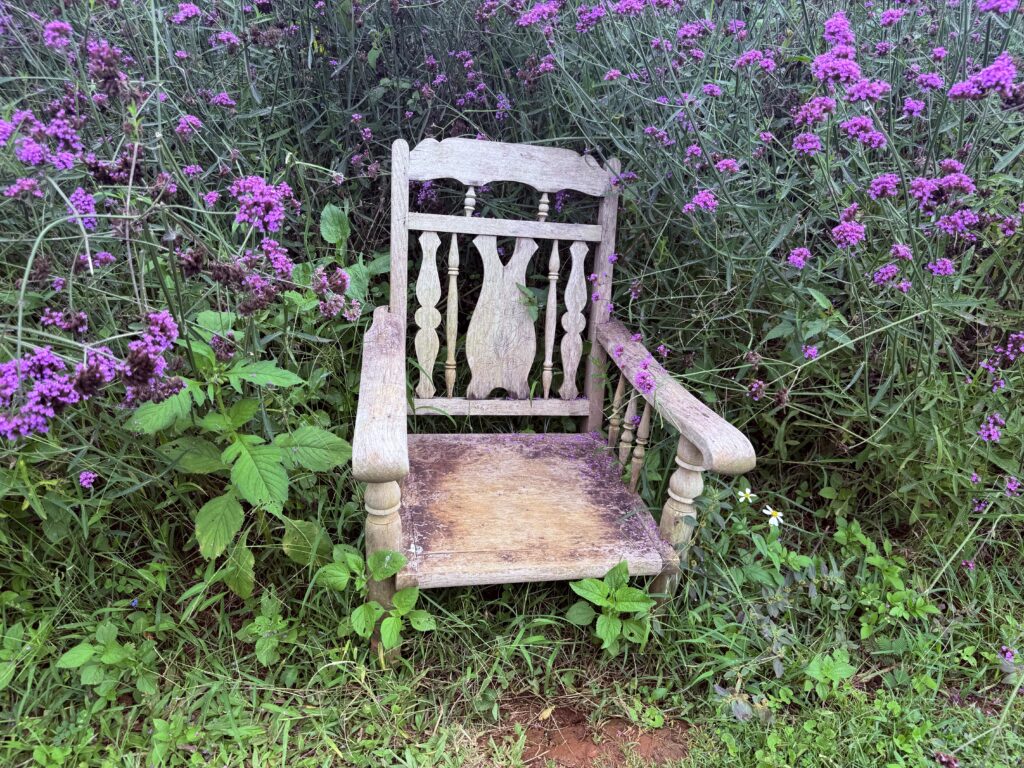
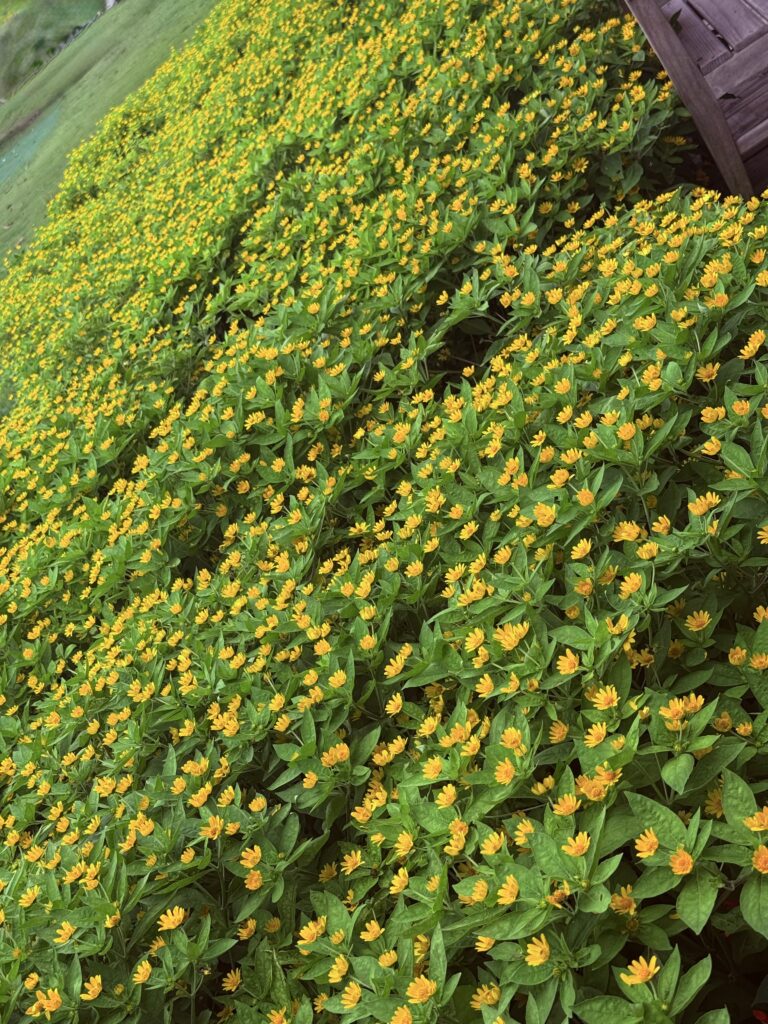
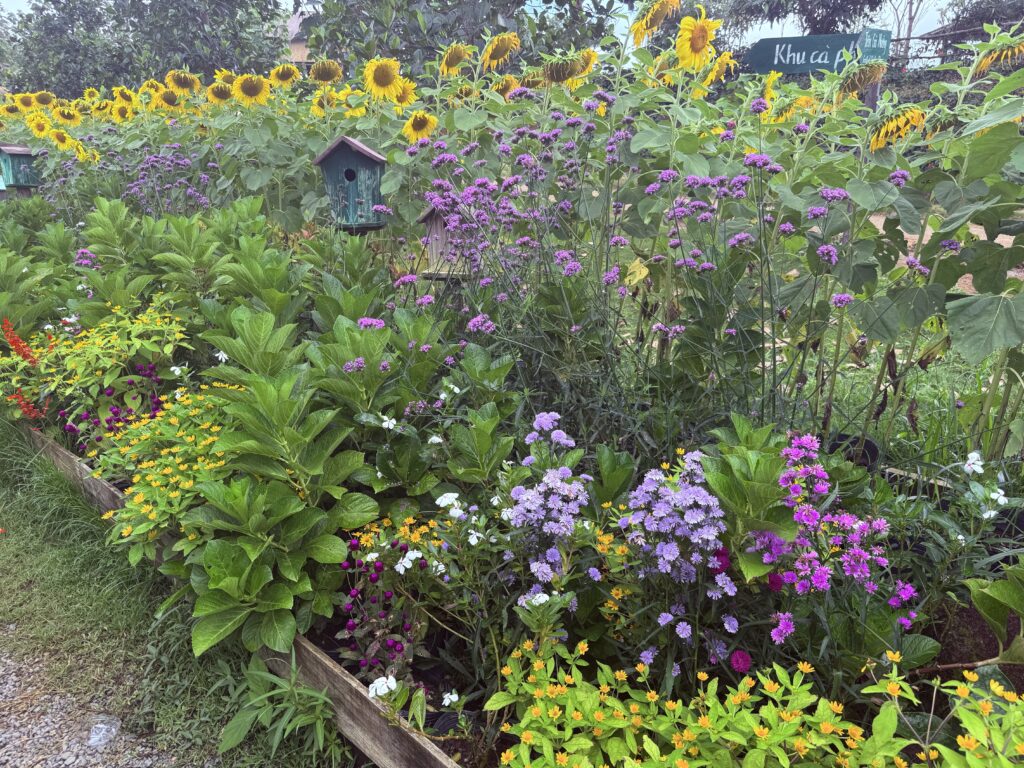
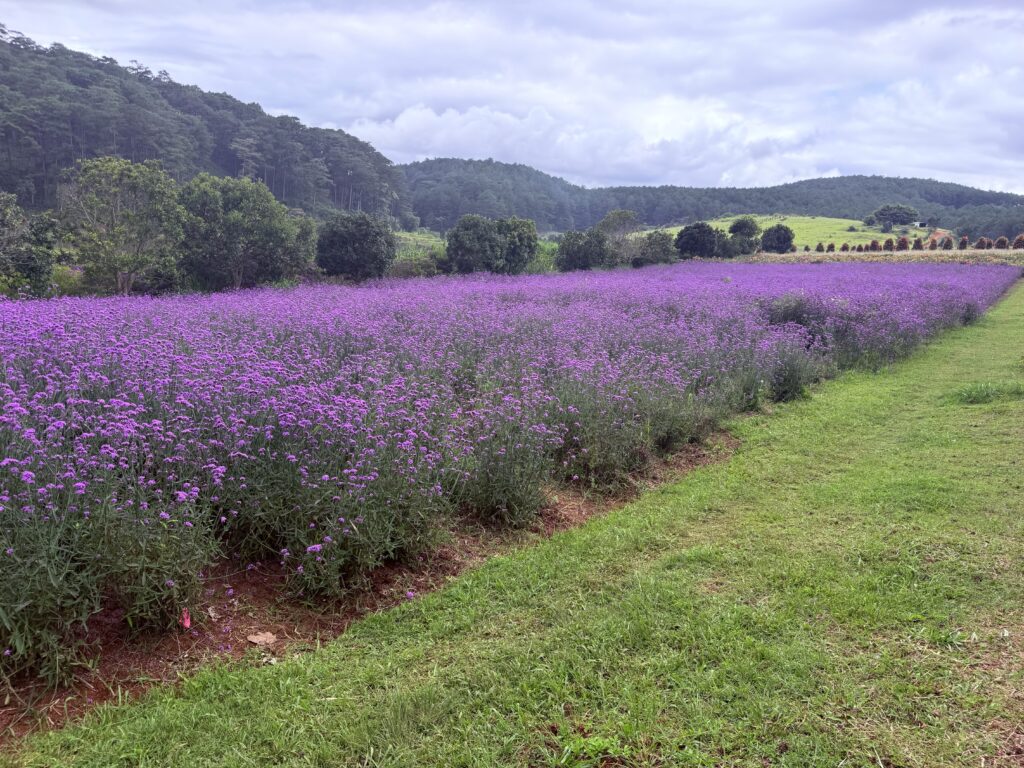
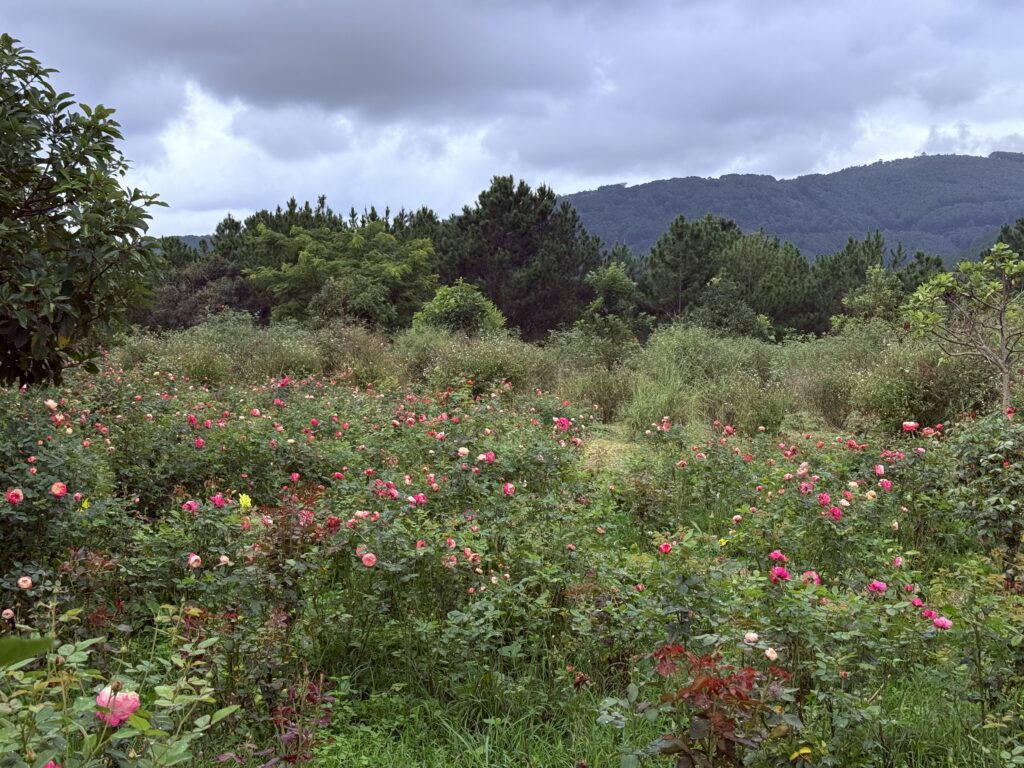
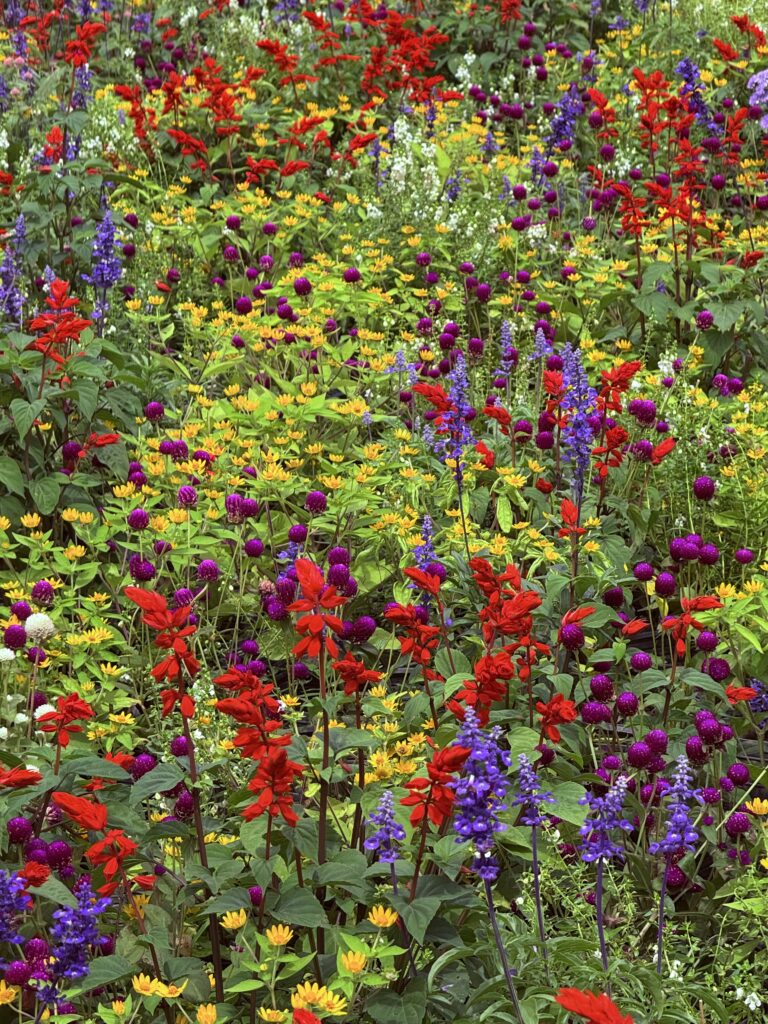
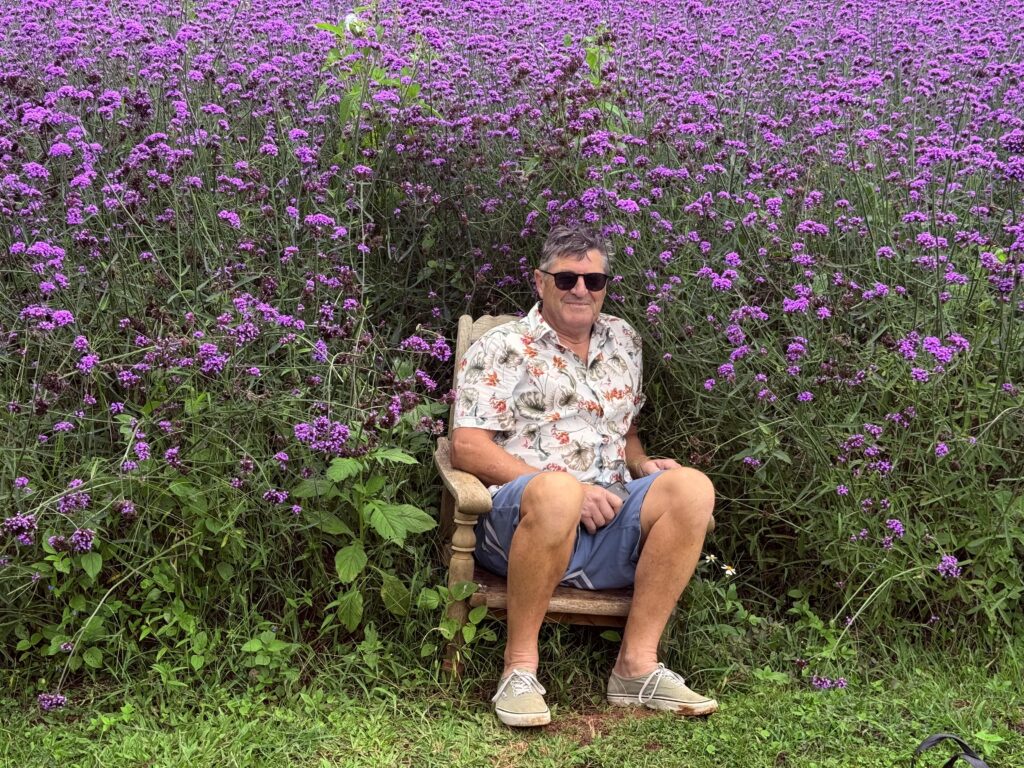
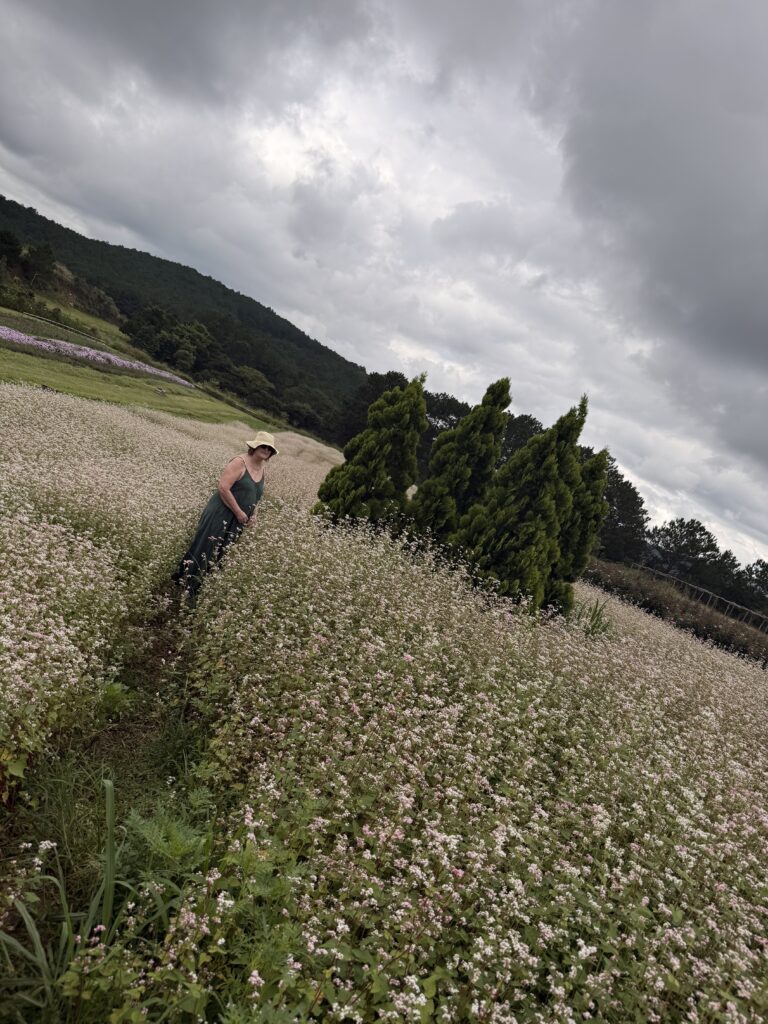
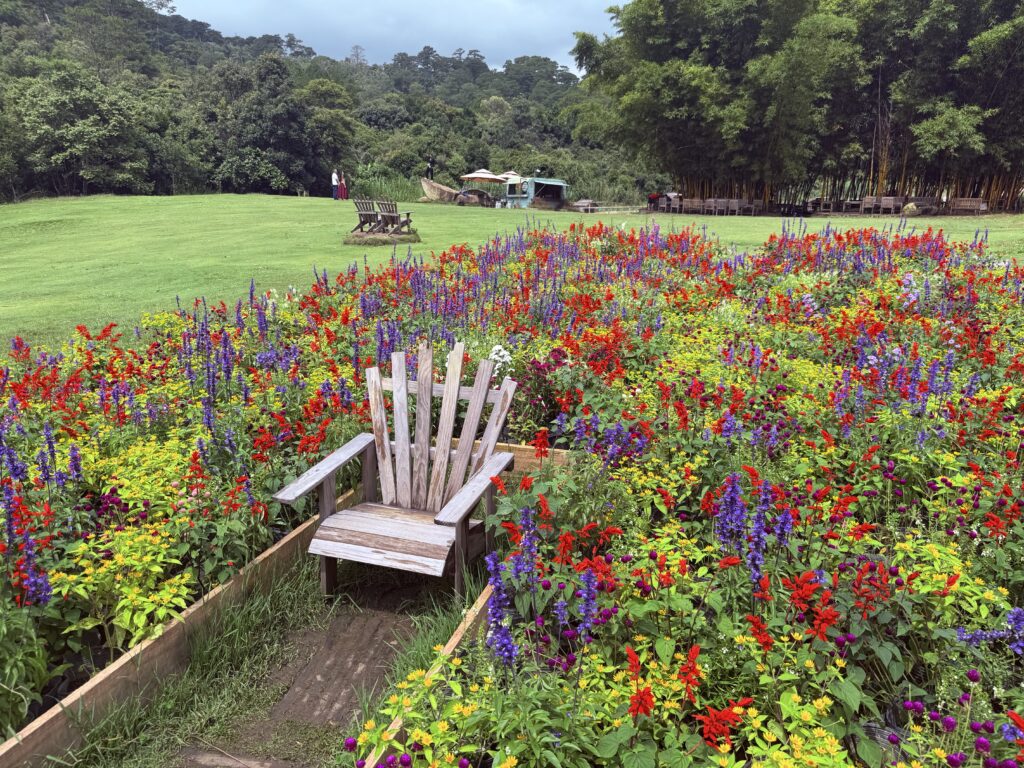
That fairytale feeling continued as we got out of the car at the journey’s end and stared at the breathtaking views before us. Beds of different enchanting flowers lined the path. Dazzling ones (dahlias), soft, gentle shades (mist flower), warm yellow, bright ones (giant sunflowers), small ones (starkly clear orange marigolds) and so on.
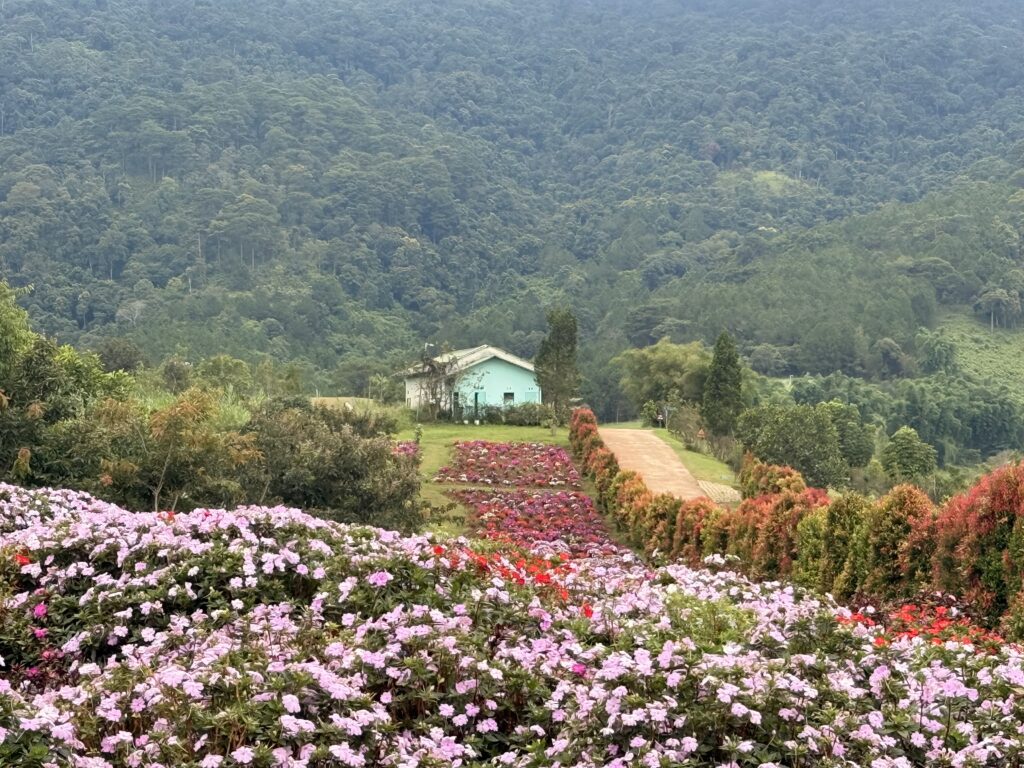
Scanning the 60 hectares of colourful beauty and gazing around the rich backdrop of deep green primaeval forests, we could make out wooden pathways to cottage gardens, rose gardens, lines of purple salvias setting off the dahlias and mist flowers. To name just a few.
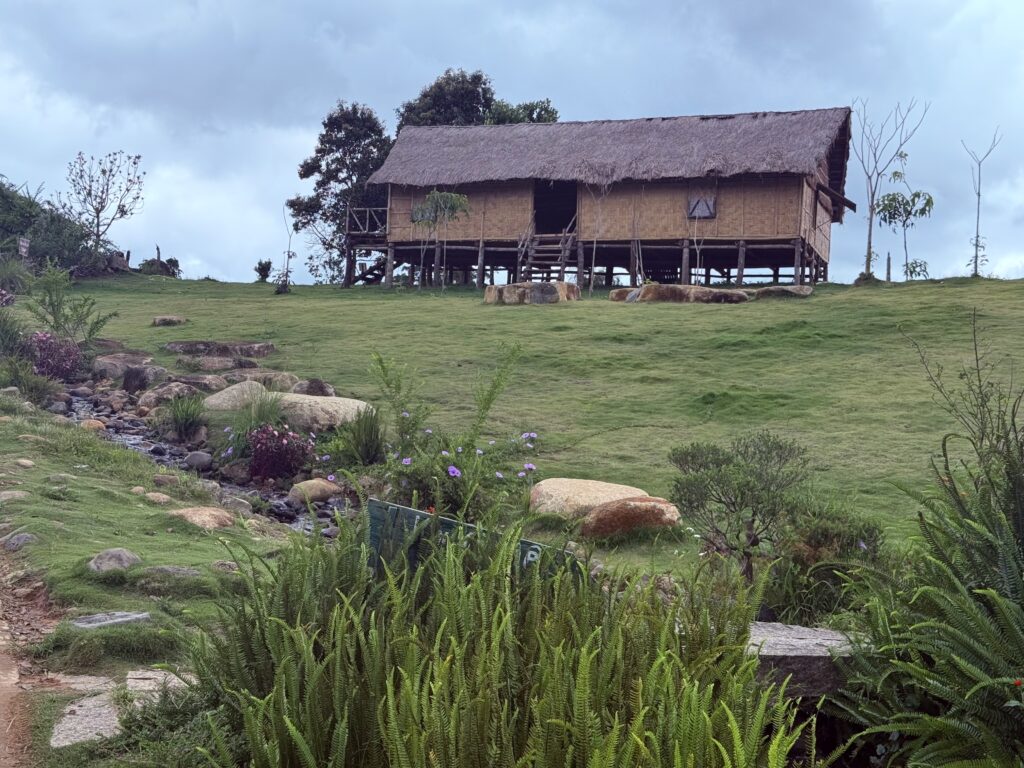
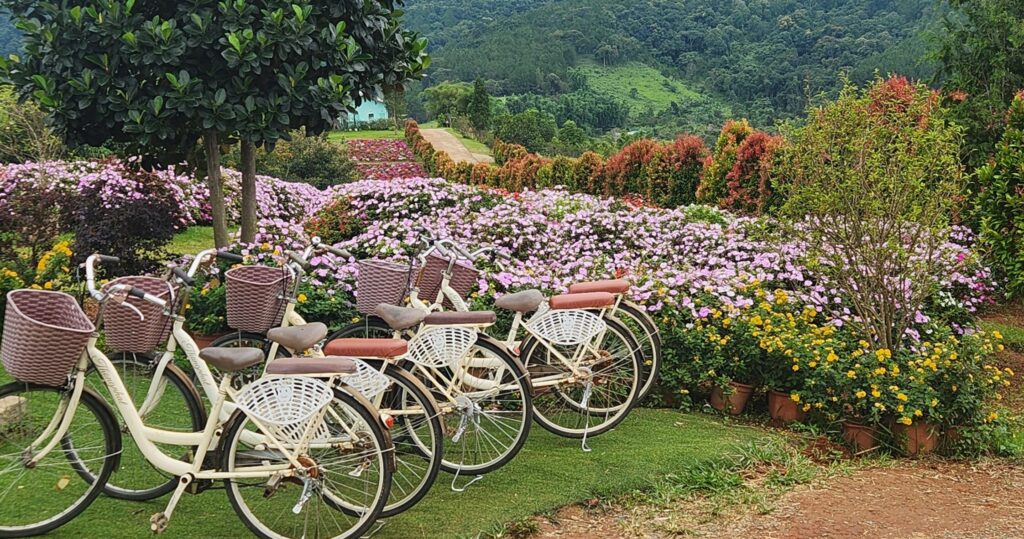
Another view showed off a line of white bicycles awaiting their passengers, little farm animals, lambs and piglets, a quaint turquoise cottage sitting on a knoll surrounded by misty soft red, orange, red and green trees, an authentic straw-roofed farmhouse, on stiles, a river lined with pretty deciduous vegetation and lush, swaying grasses. A soft, peaceful summer haze cushioned everything. All was well with the world.
Footnote: Conveniently, a charmingly rustic cafe overlooking green paddocks and knolly trees serves coffee, some food, and kindly provides every customer with a complimentary bottled drink. A welcome touch on a scorchingly hot summer’s day.
Kesiya (locally known as thong ba la) pines, dappled with gentle light
Worth noting:
The Grab ride was around NZ$25 one way, and the driver waited to take us back.
Entry for adults is around NZ$ 8.75 each; there is no time limit during opening hours. 5.30 am-6.30 pm year-round
Flowers bloom all year round and relative to their season.
You can take a picnic. The staff will transport you to a suitable spot on a golf cart.
Golf carts are available for peope less inclined to walk around the property.
I suggest you allow plenty of time to absorb this uniquely beautiful place – it really is very, very special and worth taking a day out. Our driver stopped on the way back so we could take pictures and buy (another) cold drink.
6.
And last but not least – Lang Biang Mountain
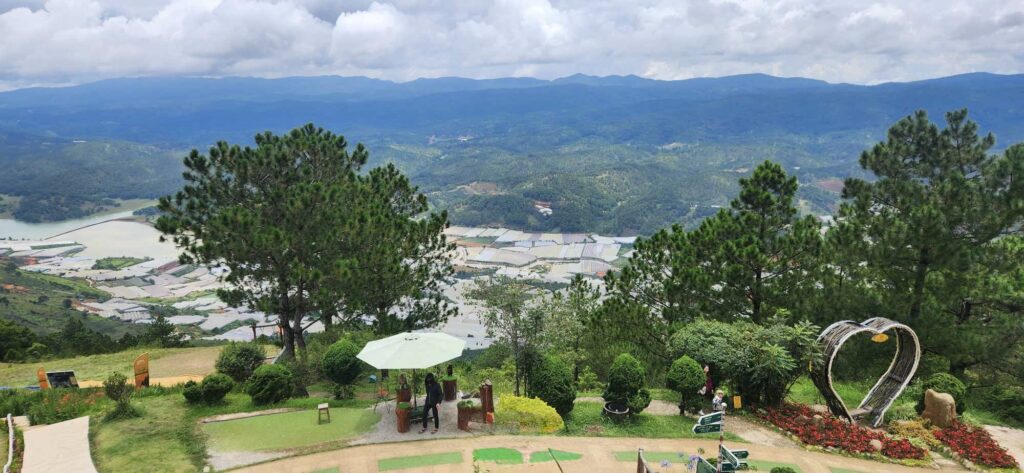
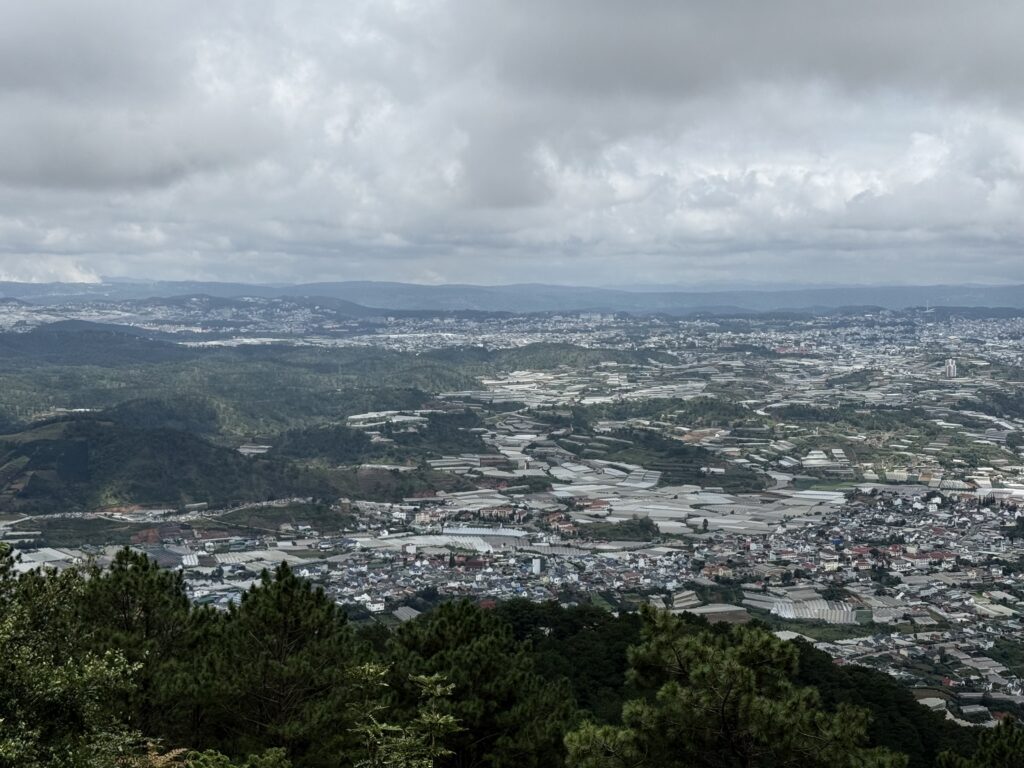
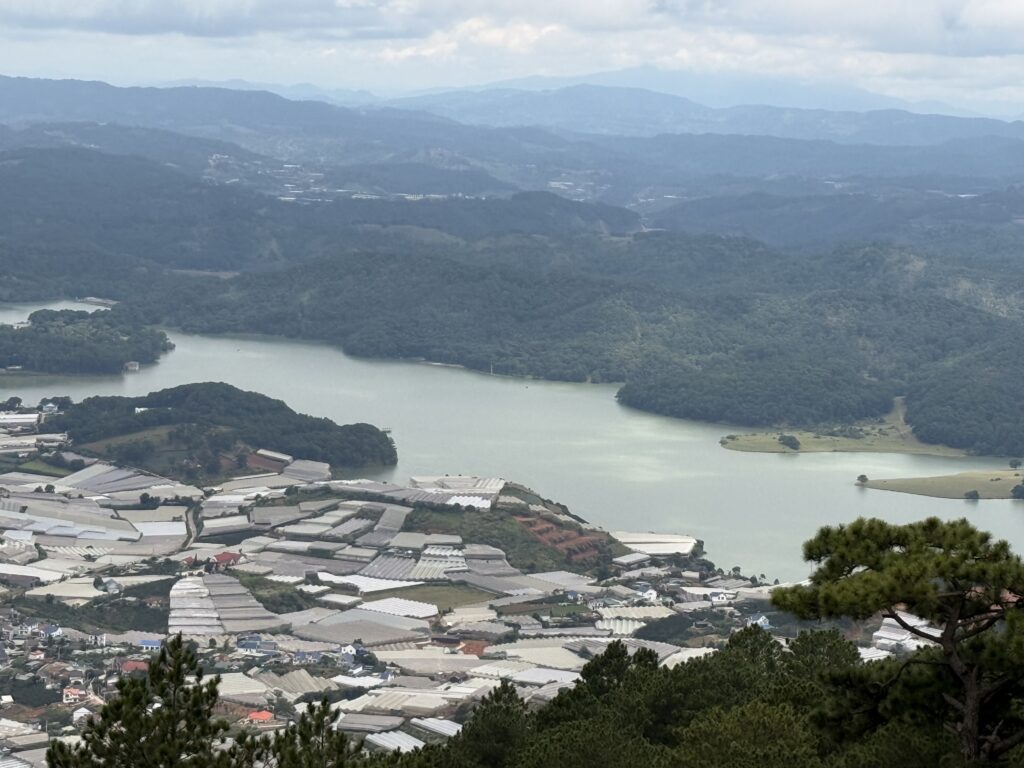
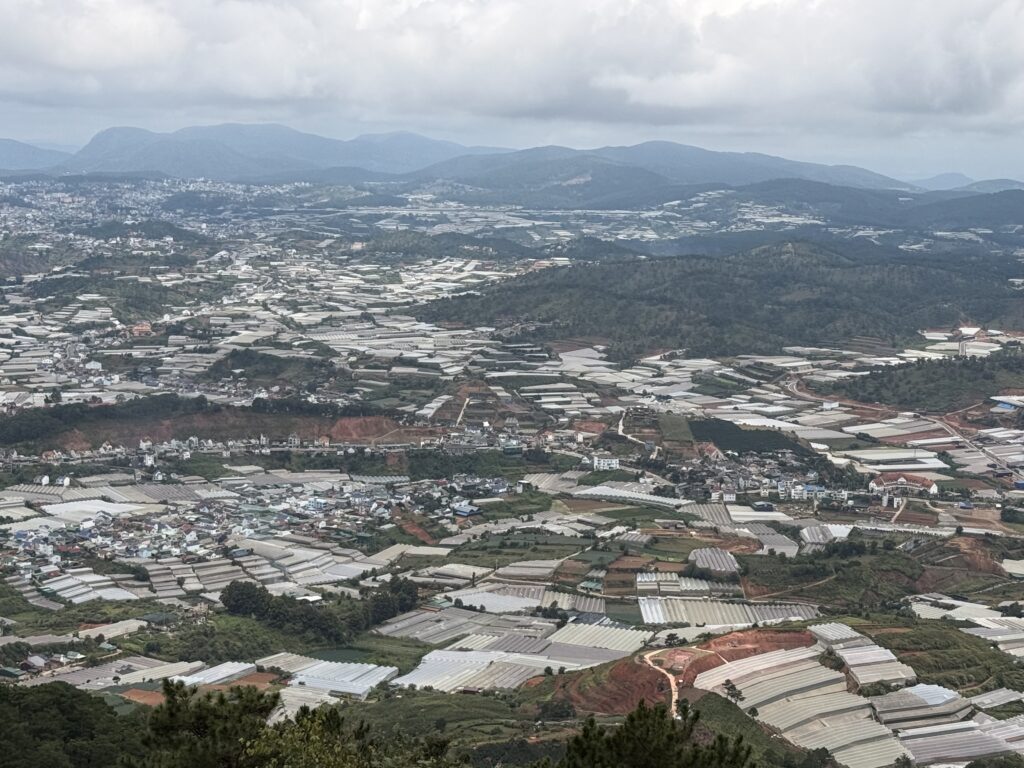
Known as “The Roof of Da Lat”, Lang Biang Mountain rises to 2,167 metres, and when you’re at the top of this special and significant spot, you’ll be awestruck by the magnificent sweeping views across Da Lat and beyond.
How to summit the Mountain?
When you arrive in the massive carpark full of generic 4wheel drive SUVs – (why there are so many soon becomes blatantly clear) – make your way to the ticket office. We paid approx $25 each return for a car to ourselves. If you decide you can wait for a car to be filled with others the cost is much cheaper by about a third.
Note: The last car leaves the top of the mountain at 4.00 pm, so you must be sitting in the allocated shelter outside(it looks like a bus stop), ready to go. The man in charge calls out names and assigns you to a car based on what you paid. Walking tracks are also available for a very cheap $3.50 for adults and half that for children (goes by height, not age).
Once you’ve been allocated a car by the car-allocation-office man who takes a note of your name, away you go, chauffeured by a driver who knows exactly what he’s doing. Suddenly you’ll see a convoy of identical cars full of like-minded tourists heading up the very steep and windy road to the summit with you.
The Roof
Upon arrival, you’d be forgiven for wondering if you’ve arrived at some Disneyland copy. But once your perspective adjusts and you start getting your bearings, you’ll take in the spectacular views across miles of river cityscapes, horticulture, and the awe-inspiring Central Highlands as a backdrop. There are some man-made visual attractions too.
There’s fun to be had, but there’s a love story too
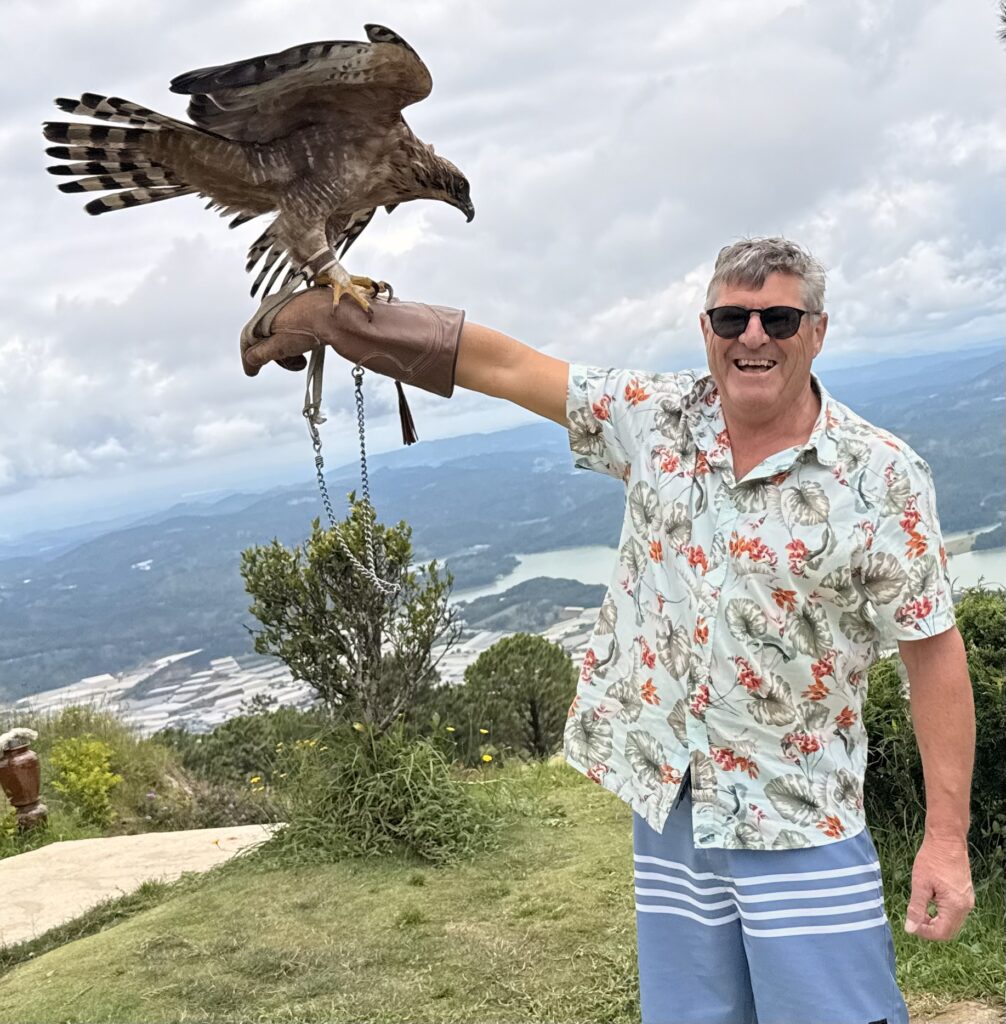
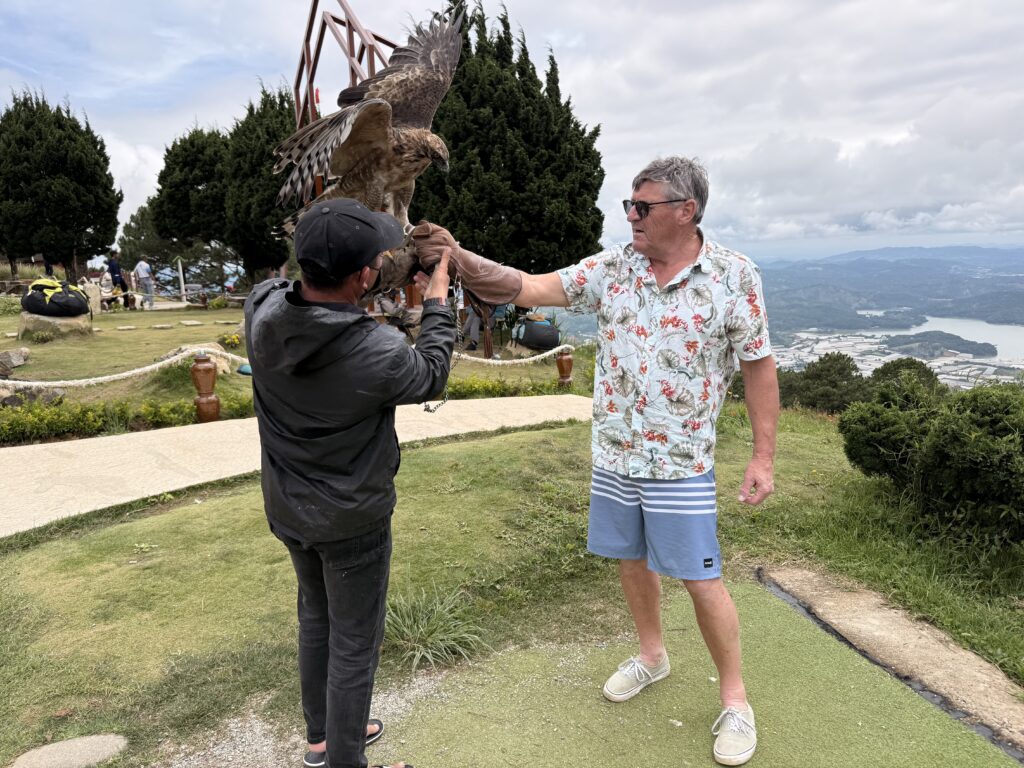
It cost around NZ$5.00 for a very friendly man to place a flapping, fierce-looking real-life eagle on my husband’s arm, hold it at shoulder level, and spend 10 minutes enjoying being up close and friendly with such a magnificent creature. I was an observer only and still found the experience exhilarating.
After that thrill, we wandered around the mountain and took in the variety of fun, welcoming offerings. The lovely terraced levels provide places to sit, breathe, and take in the sweeping views. At the same time, tons of greenery breaks the starkness of being up so high. There’s also a small outdoor market selling clothing and souvenirs and, importantly, a large cafe where a cool drink is a welcome break from the heat.
Above all, though, the mountain’s cultural importance mustn’t be overlooked. It is renowned for symbolising romance and devotion because, as the legend goes, two lovers, one called K’Lang and the other H’Biang, from two different ethnic groups, were forbidden by their families from being together, so they had no option but to live in the mountains until death. After they died, their families buried the hachet and named the mountain after the star-crossed lovers. A concrete statue of them together at the top of the hill symbolises their love.
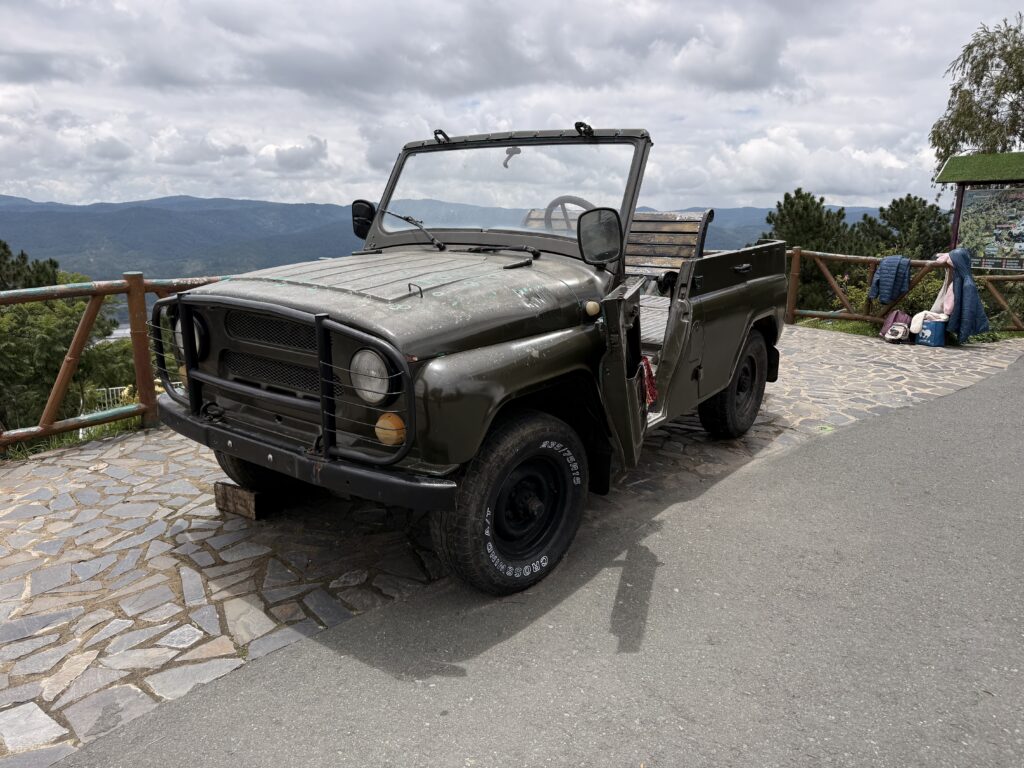
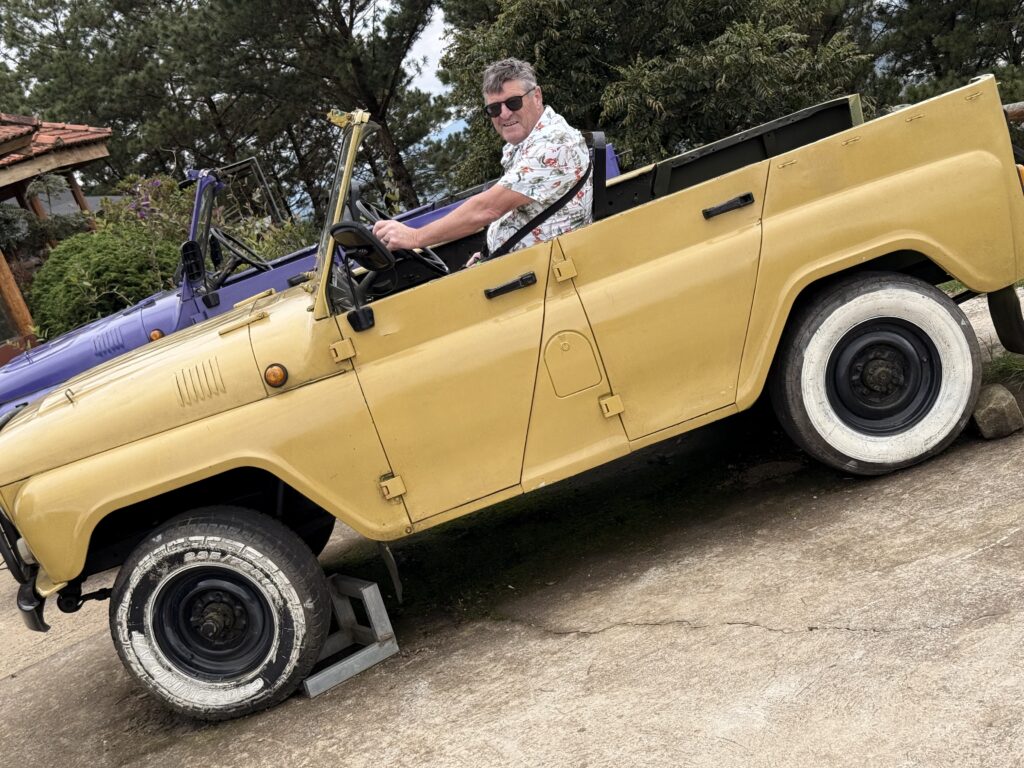
The summit also provides more light-hearted and interactive displays such as the retro vintage jeep collection (yes, you’re allowed to sit in them and play at being a kid again), the big red lettering spelling out Lang Biang Mountain placed right on the rim of the mountain, whimsical fairytale-like statues of animals, swings and floral frames and an interactive brightly coloured see-saw where many fully grown adults were channelling their inner child, laughing and playfully teasing one another as they tried to bump off their opposing rider.
Why?
I would recommend this attraction purely for the once-in-a-lifetime views and for the delightful, almost innocent way the Vietnamese celebrate life and their “inner child”.
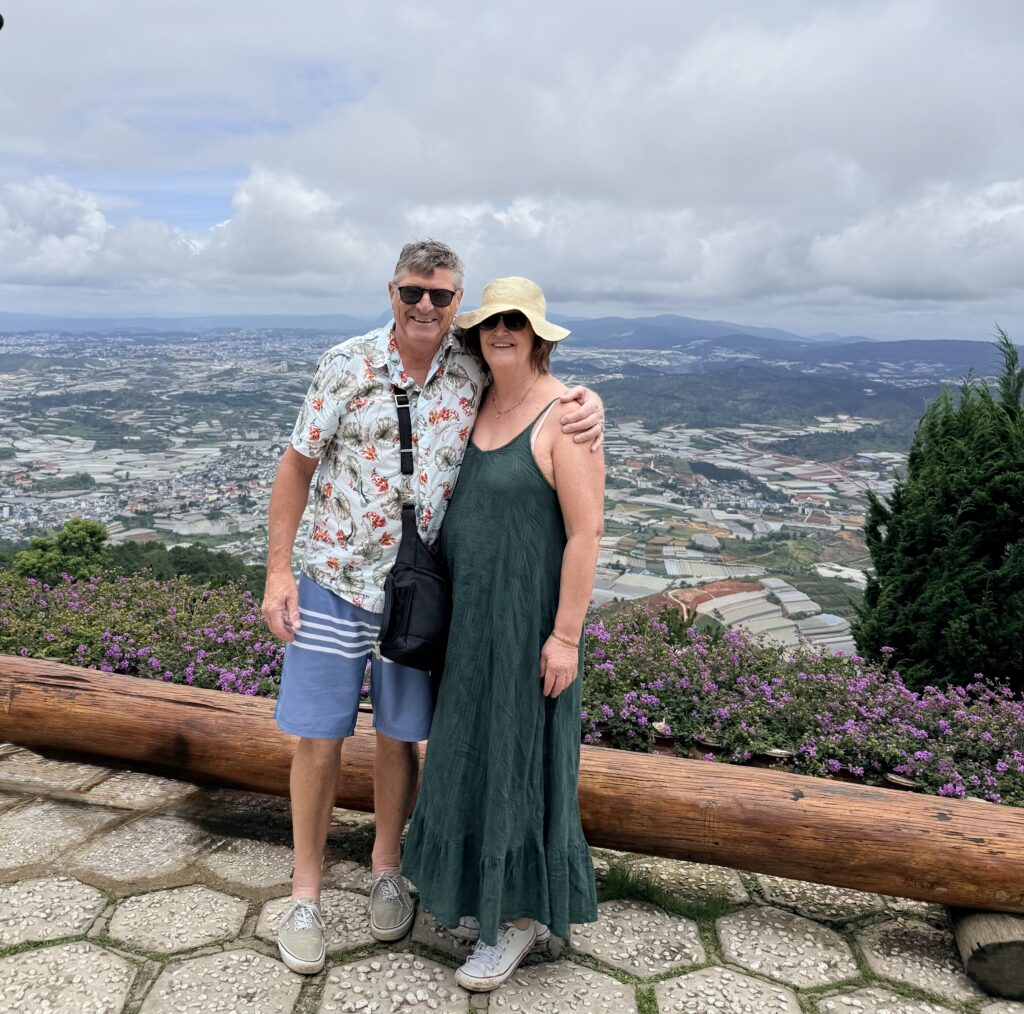
For example, a young father wore, without a care in the world, a ridiculously silly hat that covered part of his face while playing a game with his young daughter, who didn’t think her Dad looked ridiculous. His smile was as wide as the mountain views. Oh, and I won’t forget the sweet Vietnamese woman who drifted over and insisted on taking a photo of us together with kindness and childlike charm. Thank you.
Other helpful info about Dalat
MTR stayed
1. City central – Le Macaron Boutique Hotel . Lovely, very small, very central and very cheap – NZ$70 per night. Clean with lovely staff. No onsite restuarant or catering services available.
2. Highlands – Dai May Tuyet Hotel – At the fringe of the entrance to the highlands. Simple but perfect. Right next door to the cable car entrance, opposite several charming restaurants and our favourite breakfast place – Annie’s. Reasonable NZ$75 per night. Gorgeous views of Da Lat city and countryside. No catering onsite.
How MTR got around
For transport MTR; used Grab – the asian version of Uber – only cheaper and quicker. Download the app to your phone, and away you go. Rides were cheap.
NOTE: Dalat’s international airport is due to reopen in December 2026
Other “Stuff”
Weather (July/August)-It is Vietnam’s rainy season during this time of year.
We enjoyed a good mix of sun and overcast weather. Remember, Dalat is in the Highlands, so temps are cooler than at sea level. We had regular downpours, and most evenings and mornings the city and hills were shrouded in a romantic coat of mist that quickly lifted once the sun rose. Overall, the weather was very pleasant and didn’t stop us from doing what we wanted. Umbrellas are plentiful and locals often carry them. Pack a light raincoat and a warm, light jumper or similar. The evenings in the Highlands are definitely cooler than down at sea level.was shrouded
Language barrier
English wasn’t commonly used in any of the Central Highlands areas we visited (apart from Saigon). Not understanding Vietnamese made the experience richer and more fulfilling. I am always intrigued by the ways humans manage to communicate without a common language. It is humbling and rewarding. And of course, you can always choose to download a translator app on your phone.
For additional information on Dalat, click this link.
For information on the our favourite Eateries in Central Highlands Vietnam click this link.
If you would like to know more about this story or any other story published on this website, please get in touch with me at janeco@mytravelroom.co.nz